
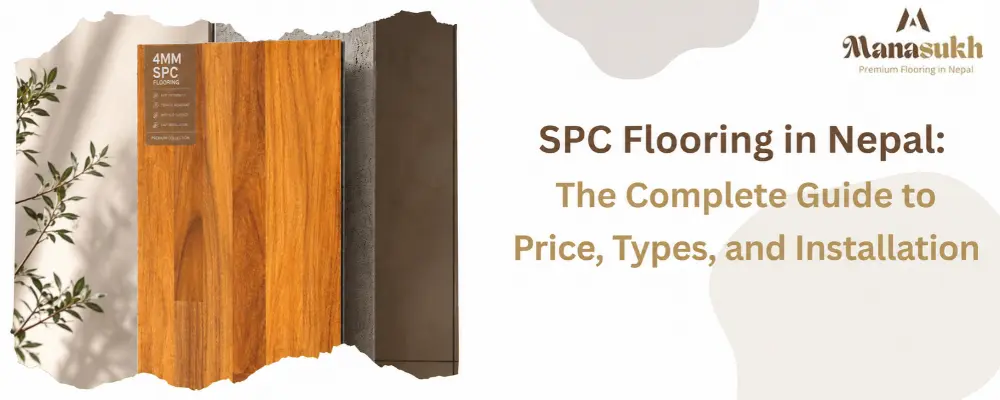
SPC flooring, short for Stone Plastic Composite, is a 100% waterproof rigid-core flooring made from limestone powder and PVC that’s engineered to handle real life without warping, fading, or cracking. Unlike traditional laminate or hardwood, SPC flooring stays stable in humidity, resists dents from heavy furniture, and can be installed directly over most existing floors thanks to its durable click-lock design making it ideal for kitchens, bathrooms, and high-traffic homes. It looks just like natural wood or stone, feels solid underfoot, and typically lasts 25 years with minimal maintenance, which is why more homeowners and contractors are choosing SPC flooring as the practical, budget-friendly alternative to premium hardwood.
Tiles crack in the monsoon when the ground shifts, and wooden floors swell or warp the moment humidity creeps up. SPC flooring in Nepal has become the answer many homeowners, architects, and contractors now reach for, because it solves both problems at once while still looking like natural wood or stone.
This guide breaks down what SPC flooring actually is, how it performs in Nepal’s climate, what it costs per square foot in Kathmandu and beyond, and how to choose a supplier you can trust. Whether you are renovating a rental apartment in Baneshwor or fitting out a new hotel in Pokhara, you will find the practical details you need here, not just marketing claims.
What Is SPC Flooring and What Is It Made Of
SPC flooring, short for Stone Plastic Composite flooring, is a rigid, waterproof floor covering made mainly from limestone powder, PVC, and stabilizers pressed into a dense core. It clicks together like a puzzle and sits on top of your existing floor without needing cement or heavy tools. For Nepali homes, that combination of strength and easy installation is exactly why demand has grown so fast over the last few years.
What Is SPC Flooring Made Of
SPC flooring is built from four main parts: a stone-plastic composite core, a printed design layer, a wear layer, and sometimes an attached underlayment. The core is roughly 80 percent natural limestone powder combined with PVC resin, which is what makes it rigid and dense rather than soft like ordinary vinyl sheet flooring.
How SPC Flooring Is Made
Manufacturers heat and compress limestone powder with polyvinyl chloride and stabilizing additives into solid sheets under high pressure. A high-resolution image layer, usually printed to mimic wood grain, stone, or tile, is fused on top. A transparent wear layer is then bonded over that image to protect it from scratches and stains, and the plank is finally cut and grooved with a click-lock edge for tool-free installation.
SPC Flooring Layers and Specifications
Understanding the layers helps you compare products from different sellers instead of choosing based on price alone. Below is a simple breakdown of what each layer does.
| Layer | Function | What to Check |
|---|---|---|
| Wear layer | Resists scratches, stains, and daily wear | Measured in mm, thicker means longer life |
| Design/print layer | Gives the wood, stone, or tile look | Look for realistic texture, not just a flat photo |
| SPC core | Provides rigidity and waterproofing | Should feel dense and heavy, not hollow |
| Underlayment (IXPE or EVA) | Adds sound dampening and comfort underfoot | Often pre-attached, usually 1 to 2 mm |
SPC flooring thickness in Nepal is commonly sold in three ranges. 5mm SPC flooring is the lightest option and works well for low-traffic bedrooms. 6mm SPC flooring is the most popular middle ground for living rooms and apartments. 7mm SPC flooring is thicker and better suited to offices, hotels, and other high-traffic commercial spaces where the floor needs to handle constant footfall.
Why SPC Flooring Suits Nepal’s Climate
SPC flooring and Nepal’s climate are a good match because the material does not absorb moisture, does not swell in humidity, and does not need seasonal maintenance the way timber floors do. That matters in a country where the Tarai gets intense humidity, the hills face heavy monsoon rain, and the mountain valleys swing between cold winters and warm summers.
Kathmandu’s climate brings sudden temperature shifts between day and night, along with a monsoon season that runs from roughly June to September. SPC flooring in Kathmandu’s climate holds up well through this because the core is fully synthetic and inorganic, so there is no wood fiber to rot, no grain to crack from dryness, and no cupping from trapped moisture underneath.
For homes near rivers, ground floors that get occasional dampness, or apartments where cement floors were laid without a strong moisture barrier, SPC flooring’s water resistance offers a safety margin that laminate and solid wood flooring simply cannot match. This is one of the main reasons contractors now recommend it as one of the best flooring options for rainy season in Nepal.
SPC Flooring vs Other Flooring Types
Choosing between SPC, WPC, laminate, vinyl, tiles, and wood usually comes down to three things: how wet the area gets, how much foot traffic it sees, and your budget. SPC generally wins on water resistance and durability, while natural materials like wood and marble win on prestige and resale value in premium properties.
SPC Flooring vs WPC Flooring
WPC, or Wood Plastic Composite, uses a wood-based core instead of a limestone-based one. This makes WPC softer and slightly warmer underfoot, but also less dense and more prone to denting under heavy furniture compared to SPC.
| Feature | SPC Flooring | WPC Flooring |
|---|---|---|
| Core material | Limestone and PVC | Wood fiber and PVC |
| Water resistance | Excellent | Very good, slightly lower |
| Density and durability | Higher, resists dents better | Softer, more cushioned feel |
| Best for | High traffic, commercial, humid areas | Bedrooms, quieter home areas |
| Typical price in Nepal | Generally lower per sq ft | Generally higher per sq ft |
SPC vs Laminate Flooring
Laminate flooring uses a wood-fiber core (HDF) that is not waterproof. If water sits on a laminate floor for even a few hours, the edges can swell and the planks can warp permanently. SPC flooring’s PVC and limestone core does not have this problem, which makes it a safer choice for Nepali kitchens, bathrooms, and entryways where water exposure is common.
SPC vs Vinyl Flooring
Standard vinyl flooring, often called LVT or sheet vinyl, is flexible and thinner, which means it shows more imperfections from an uneven subfloor underneath. SPC flooring’s rigid core bridges small subfloor irregularities better, so it tends to look flatter and feel sturdier underfoot, especially on older Nepali concrete floors that were never perfectly leveled.
SPC Flooring vs Tiles and Ceramic Tiles
Tiles are harder, colder, and can crack if the concrete slab beneath them shifts slightly, which is a real concern in earthquake-prone regions. SPC flooring is more flexible, so it tolerates minor building movement better, installs in a fraction of the time, and feels warmer underfoot during winter. Tiles, however, still edge out SPC in extremely high-heat areas like near a wood stove, and some buyers still prefer the traditional look of natural stone tiles for bathrooms.
SPC Flooring vs Marble and Wooden Flooring
Marble and solid wood remain the premium choice for buyers focused purely on resale prestige, but both come with real maintenance demands. Marble needs periodic sealing and can stain, while solid wood needs polishing and is vulnerable to Nepal’s humidity swings. SPC flooring delivers a similar visual result at a lower cost and with far less upkeep, which is why many mid-range and premium apartment projects in Kathmandu now specify it instead.
Which flooring is best for a home in Nepal? For most residential spaces, SPC flooring offers the strongest balance of water resistance, durability, and cost among the popular options available in Nepal, while solid wood and marble remain better suited to buyers prioritizing traditional prestige over practicality.
Advantages and Disadvantages of SPC Flooring
No flooring material is perfect for every situation. Knowing the real advantages and disadvantages of SPC flooring before you buy helps you avoid surprises after installation.
SPC Flooring Advantages
- Waterproof core, safe for kitchens, bathrooms, and flood-prone ground floors
- Scratch and stain resistant wear layer, holds up well against pets and furniture
- Termite resistant, unlike solid wood flooring which remains a target for wood-boring insects in Nepal’s lower altitudes
- Easy click-lock installation, often completed in a day or two without adhesive or cement work
- Works over uneven floors reasonably well thanks to the rigid core
- Noise reduction when paired with an attached underlayment, useful in apartment buildings
- Low long-term maintenance, no polishing or sealing required
SPC Flooring Disadvantages and Common Problems
- Feels harder and colder underfoot compared to carpet or solid wood
- Lower-quality batches from unverified sellers can have a weak click-lock joint that separates under pressure
- Direct, prolonged sun exposure can fade the print layer on some lower-grade products over time
- Heavy furniture without protective pads can leave indentations on thinner 5mm boards
- Poor subfloor preparation is the most common cause of SPC flooring installation problems, including gaps and uneven joints
Most SPC flooring problems in Nepal trace back to two causes: buying an unverified low-grade product, or skipping proper subfloor leveling before installation. Both are avoidable by working with an established supplier and following correct installation steps.
SPC Flooring Price in Nepal
SPC flooring price in Nepal typically depends on three factors: plank thickness, wear layer thickness, and the reputation of the brand or supplier. As a general guide, thinner 4 to 5mm boards sit at the lower end of the market, while 6mm and 7mm boards with a thicker wear layer cost more per square foot.
Because rates change with import costs, currency movement, and seasonal demand, always confirm the current SPC flooring rate in Nepal directly with a supplier rather than relying on older published figures. We keep our own pricing updated and transparent, and you can request a current quotation at any time.
What Affects SPC Flooring Cost Per Sq Ft in Nepal
| Factor | How It Affects Price |
|---|---|
| Thickness (5mm, 6mm, 7mm) | Thicker boards generally cost more |
| Wear layer thickness | A thicker wear layer raises durability and price |
| Design and finish quality | Realistic wood-grain embossing costs more than flat prints |
| Underlayment type | Boards with built-in sound-dampening layers cost slightly more |
| Import and logistics | Kathmandu Valley delivery often costs less than remote districts |
| Installation complexity | Uneven floors or intricate cutting add labor cost |
SPC flooring price in Kathmandu is usually the most competitive within Nepal because most suppliers and warehouses are based in or near the Valley, which keeps transport costs down. Buyers outside the Valley should factor in delivery charges when comparing an SPC flooring quotation from different sellers.
If you want an accurate, itemized SPC flooring cost per sq ft in Nepal for your specific project, including material and installation, request a free quotation from our team with your room measurements.
Where to Buy SPC Flooring in Nepal
If you are trying to buy SPC flooring in Nepal, the safest approach is to work with a supplier who can show you physical samples, confirm the wear layer thickness in writing, and stand behind the product with a warranty. Online photos alone cannot tell you how a floor will feel or hold up.
Finding an SPC Flooring Supplier or Dealer Near You
When searching for an SPC flooring supplier near me or SPC flooring dealer near me, ask these three questions before committing:
- Can you provide a physical sample to test at home first
- What is the wear layer thickness in mm, not just the total plank thickness
- Is there a written warranty covering the click-lock joint and wear layer
SPC Flooring Wholesale in Nepal
Contractors, interior designers, and property developers looking for SPC flooring wholesale in Nepal or SPC flooring wholesale in Kathmandu typically get better per-unit pricing when ordering in bulk for multi-unit apartment or hotel projects. Wholesale buyers should still insist on the same quality checks as retail buyers, since bulk orders make a defective batch far more costly to replace.
We supply both retail and wholesale SPC flooring across Kathmandu Valley and beyond, and we welcome bulk inquiries from contractors and developers.
SPC Flooring for Different Spaces
The best SPC flooring for Nepali homes depends heavily on how a room is used. A busy kitchen has different needs than a quiet bedroom, and a hotel lobby has different needs than a private apartment.
SPC Flooring for Homes and Apartments in Nepal
For SPC flooring for apartments in Nepal, a 5mm or 6mm board with an attached underlayment works well, since it reduces footstep noise for neighbors below, which matters in shared buildings. For SPC flooring for rental homes in Nepal, durability and easy replacement matter more than premium finishes, since tenants change and wear patterns are harder to control.
Room by room, here is what generally works best:
- SPC flooring for kitchen in Nepal: prioritize full waterproofing and a textured, slip-resistant surface finish
- SPC flooring for bathroom in Nepal: choose boards rated for wet areas and confirm the edge sealing method with your installer
- SPC flooring for bedroom in Nepal: a 5mm board is usually sufficient given lower foot traffic, and a softer underlayment adds comfort
- SPC flooring for living room in Nepal: 6mm with a durable wear layer handles daily traffic and furniture movement well
SPC Flooring for Commercial Spaces
For SPC flooring for offices in Nepal, SPC flooring for hotels in Nepal, and SPC flooring for restaurants in Nepal, thicker 6mm to 7mm boards with a reinforced wear layer are the standard recommendation, since these spaces see far more daily foot traffic than a typical home. SPC flooring for commercial buildings in Nepal should always be matched to expected footfall, not chosen on looks alone, to avoid premature wear near entrances and high-traffic corridors.
Best Flooring for Modern Homes in Nepal
For buyers building or renovating a modern home in Nepal, SPC flooring pairs well with contemporary interior styles because it comes in a wide range of wood-look and stone-look finishes without the maintenance burden of the real materials. It also suits open-plan layouts, since the same flooring can run continuously from living areas into kitchens without worrying about water damage at the transition points.
How to Install SPC Flooring
SPC flooring installation follows a click-lock, floating floor method that does not require nails, glue, or cement in most cases, which is a major reason it has become popular for renovations in Nepal where minimizing dust and construction time matters.
Step-by-Step SPC Flooring Installation
- Prepare the subfloor. Clean, dry, and check for major dips or bumps, since these affect the final finish.
- Lay the underlayment if the boards do not already have one attached, to add cushioning and sound dampening.
- Start from a straight wall, laying the first row with the tongue side facing the wall and leaving a small expansion gap around the room’s edges.
- Click each board into place at a slight angle, then press down to lock the joint flat.
- Stagger the seams between rows for a natural look and added structural strength.
- Cut boards to fit around doorways, pipes, and room edges using a fine-tooth saw.
- Install skirting or transition strips to cover the expansion gap and finish the edges cleanly.
SPC Flooring for Uneven Floors
SPC flooring tolerates minor unevenness better than tiles because of its rigid but slightly flexible core, but gaps larger than a few millimeters should still be leveled with a self-leveling compound before installation. Skipping this step is one of the most common causes of hollow sounds, joint separation, and long-term SPC flooring installation problems.
How to Clean and Maintain SPC Flooring
SPC flooring is one of the lowest-maintenance flooring options available in Nepal, but a few simple habits will extend its life considerably.
Daily and Weekly Cleaning
Sweep or vacuum regularly to remove grit that can scratch the wear layer, then damp mop with a mild, pH-neutral cleaner. Avoid steam mops and harsh ammonia-based cleaners, since excessive heat and strong chemicals can affect the surface finish over time.
SPC Flooring Repair and Replacement
Because SPC flooring uses a click-lock plank system, a single damaged board can usually be replaced without redoing the entire floor, provided you kept a few spare boards from the original batch. For larger repairs or if boards were glued down instead of floated, replacement becomes more involved and is best handled by a professional installer.
How Long Does SPC Flooring Last
With normal residential use and proper installation, SPC flooring commonly lasts well over a decade, and manufacturer warranties for the wear layer often reflect this. Actual lifespan depends heavily on foot traffic, sunlight exposure, and how well the subfloor was prepared before installation.
Choosing the Best SPC Flooring in Nepal
Finding the best SPC flooring in Nepal comes down to matching the right thickness and wear layer to your space, buying from a supplier who provides real samples and a written warranty, and getting installation done by someone experienced with click-lock systems on Nepali subfloors.
For buyers comparing affordable SPC flooring in Nepal against premium SPC flooring in Nepal, remember that the cheapest option per square foot is not always the cheapest option over ten years. A slightly thicker wear layer or a better underlayment often pays for itself by avoiding early replacement.
SPC flooring is a waterproof, rigid-core floor made from limestone and PVC that resists Nepal’s humidity and monsoon dampness far better than laminate or solid wood, while costing less than marble or premium hardwood. For most Kathmandu homes, a 6mm board with a 0.3mm or thicker wear layer offers the best balance of durability and price.
Frequently Asked Questions
1. What is SPC flooring made of?
SPC flooring is made from a core of limestone powder and PVC resin, topped with a printed design layer and a protective wear layer.
2. Is SPC flooring waterproof?
Yes, the limestone and PVC core is fully waterproof, which is why SPC flooring is commonly used in kitchens, bathrooms, and ground-floor rooms prone to dampness.
3. Is SPC flooring durable?
Yes, SPC flooring is denser and more rigid than standard vinyl or laminate, and it resists dents, scratches, and stains well when the wear layer is adequate for the space.
4. Is SPC flooring good for Nepali homes?
Yes, its water resistance and stability make it well suited to Nepal’s humid monsoon season and the temperature swings common in the hills and Kathmandu Valley.
5. How is SPC flooring different from WPC flooring?
SPC flooring uses a limestone-based core, which makes it denser and firmer, while WPC flooring uses a wood-fiber core, which feels softer and slightly warmer underfoot.
6. How long does SPC flooring last?
With proper installation and normal use, SPC flooring commonly lasts more than ten years, though exact lifespan depends on traffic levels and sunlight exposure.
7. How do you clean SPC flooring?
Sweep or vacuum regularly and damp mop with a mild, pH-neutral cleaner, avoiding steam mops and harsh chemical cleaners.
8. How do you install SPC flooring?
SPC flooring uses a click-lock floating floor system, installed over a prepared subfloor without glue or nails in most residential settings.
9. Can SPC flooring be installed over uneven floors?
It tolerates minor unevenness better than tiles, but gaps larger than a few millimeters should be leveled first to avoid hollow sounds or joint separation.
10. What is the price of SPC flooring in Nepal?
Prices vary by thickness, wear layer quality, and supplier, so it is best to request a current quotation with your exact measurements rather than relying on general estimates.
11. What is the SPC flooring rate per square foot in Kathmandu?
Rates in Kathmandu are generally competitive since most suppliers operate within the Valley, but exact cost per sq ft depends on the board thickness and finish chosen.
12. Which is better, SPC flooring or tiles?
SPC flooring installs faster, feels warmer underfoot, and tolerates minor building movement better, while tiles remain more heat-resistant and are preferred by some buyers for their traditional look.
13. Which is better, SPC flooring or laminate?
SPC flooring is the better choice for wet or humid areas since its core is waterproof, while laminate’s wood-fiber core can swell if exposed to water.
14. Is SPC flooring suitable for apartments in Nepal?
Yes, especially boards with an attached underlayment, which helps reduce footstep noise between floors in shared apartment buildings.
15. Is SPC flooring suitable for offices and commercial spaces?
Yes, thicker 6mm to 7mm boards with a reinforced wear layer are recommended for offices, hotels, and restaurants due to higher foot traffic.
16. Does SPC flooring resist termites?
Yes, since the core is synthetic limestone and PVC rather than organic wood, it does not attract termites the way solid wood flooring can.
17. What thickness of SPC flooring should I choose?
5mm suits low-traffic bedrooms, 6mm suits most living rooms and apartments, and 7mm is recommended for offices and commercial spaces with heavy footfall.
18. Can a damaged SPC floorboard be replaced individually?
Yes, because of the click-lock design, a single damaged board can often be swapped out without redoing the entire floor if spare boards from the original batch are available.
19. Does SPC flooring fade in sunlight?
Lower-grade products can fade with prolonged direct sun exposure, so choosing a quality wear layer and using curtains or UV-protective window film in sun-facing rooms helps prevent this.
20. Where can I buy SPC flooring in Nepal?
You can buy SPC flooring from established suppliers who provide physical samples, clear wear layer specifications, and a written warranty, such as our team at Flooring in Nepal.