
Introduction
Walk into a newly renovated home in Kathmandu, Pokhara, or Biratnagar today and there is a good chance the floor under your feet is not tile, marble, or wood. It is SPC flooring, and it is quietly becoming the default choice for Nepalese homeowners, architects, and contractors alike.
The shift is not a trend for trend’s sake. Nepal’s climate is hard on floors. Monsoon humidity swells wood and lifts laminate. Temperature swings between the Terai and the hills crack tile grout over time. Marble stains and needs regular polishing to stay presentable. SPC flooring was engineered to sidestep all three problems, which is exactly why it has moved from a niche import to a mainstream choice in Nepali homes, offices, and rental units.
This guide explains what SPC flooring actually is, why it holds up so well in Nepal’s climate, how it compares to the flooring you already know, what it costs to install here, and how to choose the right product for your home. Whether you are renovating a single room or spec’ing floors for an entire building, you will find the practical details you need below.
What Is SPC Flooring?
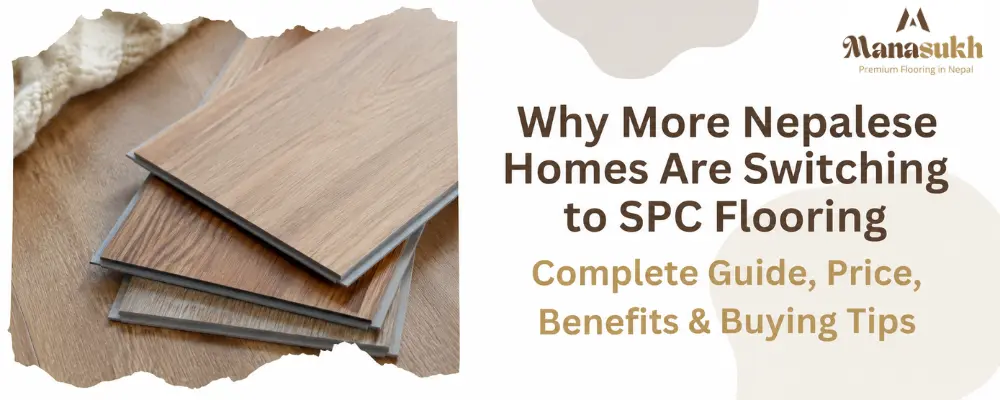
SPC flooring (Stone Plastic Composite, sometimes called Stone Polymer Composite) is a rigid-core vinyl flooring made from limestone powder, PVC, and stabilizers, topped with a printed design layer and a clear wear layer. The result is a 100% waterproof plank that looks like wood, stone, or tile but performs very differently underfoot.
Each SPC plank is typically built from four layers working together:
- UV/wear layer: A clear top coat that resists scratches, stains, and fading from sunlight.
- Decorative layer: A high-resolution printed film that replicates wood grain, stone texture, or tile patterns.
- Rigid SPC core: The dense limestone-and-PVC layer that gives the plank its strength and dimensional stability.
- Backing layer: Often pre-attached foam or cork underlayment that adds cushioning and sound absorption.
Because the core is stone-based rather than wood-based, SPC flooring does not swell, warp, or rot when it gets wet, and it barely expands or contracts as temperature and humidity change through the year.
SPC flooring is a waterproof, rigid-core vinyl plank made from limestone and PVC. It replicates the look of wood, stone, or tile, installs without glue or nails using a click-lock system, and resists moisture, temperature swings, and daily wear far better than traditional flooring materials.
Why Nepal’s Climate Makes SPC Flooring a Smart Choice
Nepal’s geography creates three flooring stresses in one country: monsoon humidity in the hills and valleys, intense heat and moisture in the Terai, and sharp temperature drops in winter. SPC flooring is built to absorb all three without visible damage.
Monsoon humidity (June to September). Rising indoor humidity during the monsoon is one of the most common causes of flooring damage in South Asia. Wood is hygroscopic, meaning it absorbs moisture from the air, which is what causes cupping, buckling, and swelling in solid wood and laminate floors during the rainy months. Because SPC’s core does not absorb water, it stays flat and stable through the wettest weeks of the year.
Temperature swings between regions. A floor installed in Kathmandu deals with cold winters, while the same product in the Terai faces sustained summer heat. Wood and laminate expand and contract noticeably with these swings, which over time opens up gaps between planks or causes edges to lift. SPC’s dense core is dimensionally stable across a wide temperature range, so it holds its shape in both climates.
Dust, mud, and high foot traffic. Urban Nepali homes deal with dust from unpaved roads and construction, plus muddy shoes during the rains. SPC’s non-porous wear layer does not let grit grind into the surface the way porous tile grout or unsealed wood can, which keeps cleaning simple and the finish looking newer for longer.
Older buildings and uneven subfloors. Many homes and apartments in Nepal have subfloors that are not perfectly level, especially in older construction. SPC’s click-lock floating installation tolerates minor subfloor imperfections better than glued-down tile or nailed hardwood, and it can often be installed directly over existing tile or concrete with minimal prep work.
SPC Flooring vs Tile, Marble, and Wood in Nepal
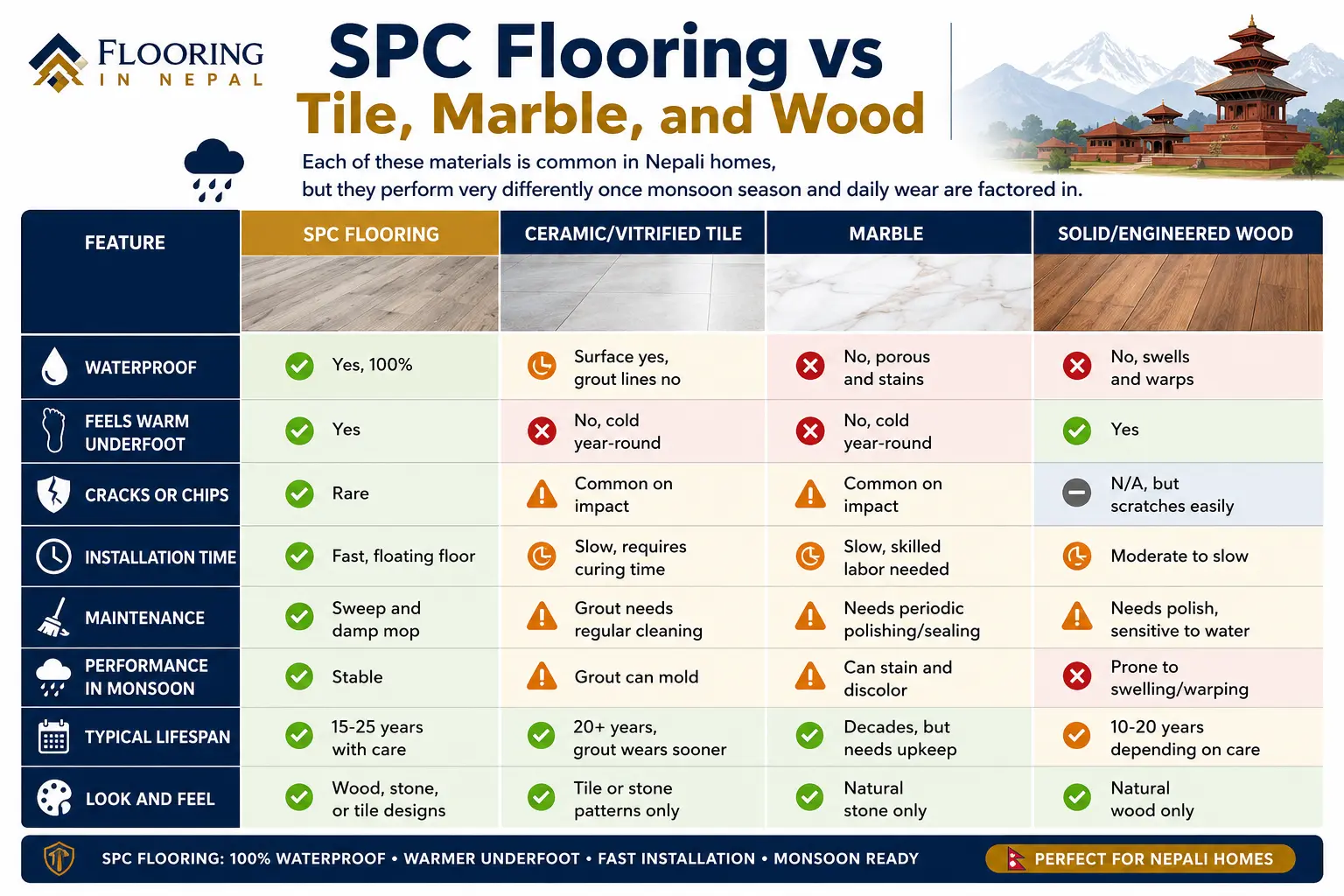
Each of these materials is common in Nepali homes, but they perform very differently once monsoon season and daily wear are factored in.
| Feature | SPC Flooring | Ceramic/Vitrified Tile | Marble | Solid/Engineered Wood |
|---|---|---|---|---|
| Waterproof | Yes, 100% | Surface yes, grout lines no | No, porous and stains | No, swells and warps |
| Feels warm underfoot | Yes | No, cold year-round | No, cold year-round | Yes |
| Cracks or chips | Rare | Common on impact | Common on impact | N/A, but scratches easily |
| Installation time | Fast, floating floor | Slow, requires curing time | Slow, skilled labor needed | Moderate to slow |
| Maintenance | Sweep and damp mop | Grout needs regular cleaning | Needs periodic polishing/sealing | Needs polish, sensitive to water |
| Performance in monsoon | Stable | Grout can mold | Can stain and discolor | Prone to swelling/warping |
| Typical lifespan | 15-25 years with care | 20+ years, grout wears sooner | Decades, but needs upkeep | 10-20 years depending on care |
| Look and feel | Wood, stone, or tile designs | Tile or stone patterns only | Natural stone only | Natural wood only |
Tiles win on raw hardness and are still a safe choice for very high-moisture areas like open terraces, but the grout lines are a long-term maintenance point and the surface stays cold underfoot, which matters during Kathmandu winters.
Marble adds prestige to a living room or staircase, but it is porous, stains from spilled turmeric or oil, and needs professional polishing every few years to keep its shine, which adds to the real cost of ownership.
Wood flooring feels the warmest and most natural, but it is the material most vulnerable to Nepal’s monsoon humidity, and repairs to warped boards are expensive and disruptive.
SPC flooring sits in the middle, combining the visual warmth of wood or stone with the moisture resistance of tile, which is why it is increasingly chosen for entire homes rather than just wet areas.
Key Benefits of SPC Flooring for Nepalese Homes
100% Waterproof Core
SPC’s core does not absorb water, so spills, monsoon dampness, and even minor leaks from a washing machine or kitchen pipe will not cause the swelling, staining, or mold growth that affects wood and unsealed tile grout.
Dimensional Stability
Because the core barely expands or contracts with temperature and humidity changes, SPC flooring holds tight seams year-round, unlike wood, which needs expansion gaps and can still develop visible gaps after a few monsoon cycles.
Dent and Scratch Resistance
The rigid limestone-PVC core resists dents from furniture and daily foot traffic far better than softer vinyl or laminate, which matters in households with children, pets, or frequently rearranged furniture.
Comfortable, Quiet Underfoot
Most SPC planks come with an attached underlayment that cushions footsteps and dampens sound between floors, an advantage in apartment buildings where noise transfer between units is a common complaint.
Fast, Low-Mess Installation
The click-lock floating floor system means no glue, no nails, and no curing time. Rooms can often be walked on the same day installation finishes, which shortens renovation timelines and reduces labor cost compared to tile or wood.
Works Over Existing Floors
In many cases, SPC can be installed directly over existing tile, concrete, or old wood flooring, which saves on demolition costs and reduces construction dust and debris, a real benefit for occupied homes.
Low, Simple Maintenance
Regular sweeping and an occasional damp mop are enough to keep SPC flooring looking new. There is no grout to scrub, no polish to reapply, and no risk of water stains soaking into the surface.
Wide Range of Designs
Modern printing technology lets SPC planks replicate oak, walnut, marble, and stone finishes convincingly, so homeowners are not choosing between durability and the aesthetic they actually want.
SPC Flooring Price in Nepal: What to Budget
Quick answer: SPC flooring in Nepal typically costs between NPR 250 and NPR 500 per square foot, inclusive of labour. The exact price depends on the plank’s thickness, wear layer quality, brand, and the size and shape of the room being floored.
Several factors move a project toward the lower or higher end of that range:
- Wear layer thickness: Thicker wear layers (used in high-traffic living rooms and commercial spaces) cost more but last longer before showing wear.
- Core thickness: Thicker planks feel more solid underfoot and handle uneven subfloors better, which affects price.
- Design and finish quality: Realistic wood or stone embossing and matte or textured finishes are typically priced higher than basic glossy finishes.
- Room size and layout: Smaller or irregularly shaped rooms increase labour cost per square foot due to more cutting and fitting.
- Subfloor preparation: Rooms that need leveling or removal of old flooring before installation add to the total cost.
Warranty: Quality SPC flooring sold in Nepal typically comes with a 25-year product warranty, which reflects the material’s dent, stain, and wear resistance under normal residential use. Always confirm in writing what the warranty covers, since terms can vary between manufacturers and suppliers.
Because pricing depends on your specific room dimensions and product choice, it is worth getting a firm quote rather than budgeting on square footage alone, especially for larger homes or multi-room projects.
Where to Use SPC Flooring in Your Home
SPC flooring’s waterproof core makes it suitable for nearly every room, which is a major reason it is replacing multiple materials at once in many renovations.
- Living rooms and bedrooms: A warmer, quieter alternative to tile, with wood-look finishes that suit Nepali interior styles.
- Kitchens: Waterproof and resistant to oil stains, unlike unsealed wood or grouted tile.
- Bathrooms: Fully waterproof planks with slip-resistant textured finishes are increasingly used here in place of tile.
- Balconies and semi-covered terraces (with suitable products): Some SPC ranges are rated for light outdoor or semi-exposed use; confirm this with your supplier before installing outside covered areas.
- Home offices and rental units: Fast installation and durability make SPC practical for landlords who need floors that hold up between tenants.
- Staircases: Available with matching stair-nosing profiles for a seamless look from floor to staircase.
How to Choose the Right SPC Flooring
Quick answer: Choose SPC flooring based on wear layer thickness for your traffic level, core thickness for comfort and subfloor tolerance, a design finish that matches your interior style, and a supplier who offers a clear warranty and after-sales support.
For beginners shopping for the first time, the two numbers to ask about are wear layer thickness (higher is more durable) and total plank thickness (higher generally means sturdier, quieter underfoot). A reputable local supplier should be able to explain both in plain terms.
For homeowners comparing options across rooms, it often makes sense to use a thicker, higher wear-layer product in high-traffic areas like the living room and entryway, and a standard-grade product in bedrooms where traffic is lighter.
For architects and contractors working on larger projects, batch consistency between boxes, click-lock compatibility across product lines, and confirmed lead times matter as much as the spec sheet, since mismatched batches can create visible colour variation across a large floor.
For budget-conscious buyers, mid-range SPC still delivers the core waterproofing and stability benefits; the price difference at the higher end is mostly about wear layer thickness, finish realism, and brand warranty terms rather than basic waterproof performance.
Installation Process: What to Expect
SPC flooring installation is faster and less disruptive than tile or wood, which is another reason it appeals to busy households.
- Site assessment: The installer checks subfloor levelness and moisture, and confirms whether old flooring needs to be removed or can be floored over.
- Acclimatization: Planks are typically left in the room for a short period so they adjust to indoor temperature and humidity before fitting.
- Underlayment placement: If the planks do not already have attached padding, a separate underlayment layer is rolled out first.
- Click-lock fitting: Planks are locked together edge to edge in a floating layout, without glue or nails, working from one side of the room to the other.
- Trimming and finishing: Boards are cut to fit around doorways and walls, and skirting or transition strips are added to finish the edges.
- Walk-through: A finished SPC floor can usually be walked on the same day, with furniture placement recommended after a short settling period as advised by the installer.
Because there is no adhesive curing time or grout drying period, a typical room can go from bare subfloor to finished floor in a single day, depending on size and layout complexity.
Maintenance and Care Tips
SPC flooring is low maintenance, but a few habits extend its lifespan noticeably:
- Sweep or dry mop regularly to remove grit before it can scratch the wear layer underfoot.
- Damp mop only, avoid soaking the floor, even though the core is waterproof, standing water at seams should still be wiped up promptly.
- Use felt pads under furniture legs to prevent dents from heavy items like sofas and dining tables.
- Place mats at entryways to reduce the amount of dust and grit tracked in, especially during Nepal’s dry, dusty months.
- Avoid steam mops and abrasive cleaners, which can dull the wear layer’s finish over time.
- Keep direct, prolonged sunlight in check with curtains or blinds where possible, since any flooring can fade slightly under years of constant UV exposure.
Design Ideas for SPC Flooring in Nepali Homes
SPC’s realistic finishes make it easy to match a range of interior styles without committing to the maintenance burden of the natural material it imitates.
- Warm oak or walnut tones work well in living rooms and bedrooms, bringing the warmth of traditional wood flooring without the monsoon risk.
- Light grey or beige stone-look planks suit modern, minimalist interiors and make small rooms feel larger and brighter.
- Herringbone or chevron plank layouts, available from some SPC ranges, add a design detail typically associated with premium wood flooring, at a fraction of the maintenance.
- Matte, textured finishes are gaining popularity over high-gloss options, since they hide dust and light scuffs better in daily use.
- Consistent flooring across open-plan living and dining areas creates a visually larger, more cohesive space, an approach made easier since SPC works across kitchens, living rooms, and bathrooms alike.
Common Mistakes to Avoid
- Choosing on looks alone: A beautiful finish with a thin wear layer will scuff quickly in a high-traffic hallway or living room.
- Skipping subfloor preparation: Installing over an uneven or damp subfloor without proper checks can cause squeaking or premature seam issues later.
- Ignoring the warranty terms: Confirm in writing what is covered, for how long, and under what conditions, rather than assuming all “25-year warranty” claims mean the same thing.
- Mixing batches without checking dye lots: Planks from different production batches can have slight colour variation, which is noticeable in large open rooms.
- Assuming all SPC is outdoor-rated: Not every SPC product is suitable for open balconies or exposed terraces; confirm with your supplier before installing outside covered areas.
- Underestimating labour cost for irregular rooms: Rooms with many corners, columns, or curves need more cutting and fitting, which affects both cost and installation time.
Frequently Asked Questions
1. What is SPC flooring made of?
SPC flooring is made from a rigid core of limestone powder and PVC, topped with a printed design layer and a protective wear layer.
2. Is SPC flooring really 100% waterproof?
Yes, the core itself does not absorb water, which is why SPC flooring is suitable for kitchens, bathrooms, and other moisture-prone areas.
3. How long does SPC flooring last?
With normal residential use and basic care, SPC flooring typically lasts 15 to 25 years, and many products carry a 25-year warranty.
4. What is the price of SPC flooring in Nepal?
SPC flooring in Nepal generally costs between NPR 250 and NPR 500 per square foot, including labour, depending on thickness, finish, and brand.
5. Does SPC flooring include labour cost in its price?
Suppliers vary, but many quoted price ranges, including NPR 250 to 500 per square foot, are inclusive of standard installation labour. Always confirm what is included before ordering.
6. Is SPC flooring good for Nepal’s monsoon season?
Yes, its waterproof, dimensionally stable core resists the swelling and warping that monsoon humidity causes in wood and laminate flooring.
7. Can SPC flooring be installed over old tile?
In many cases yes, provided the existing tile is flat and structurally sound; a supplier should assess your specific floor first.
8. Is SPC flooring suitable for bathrooms?
Yes, its waterproof core and, in many products, slip-resistant textured finishes make it a practical choice for bathrooms.
9. How is SPC flooring different from laminate flooring?
Laminate has a wood-fiber core that is water-resistant at best, while SPC has a stone-PVC core that is fully waterproof and more dimensionally stable.
10. How is SPC flooring different from WPC flooring?
SPC has a denser, harder core that makes it more impact and dent resistant, while WPC flooring is softer and slightly more comfortable underfoot.
11. Does SPC flooring feel cold like tile?
No, SPC flooring generally feels warmer underfoot than ceramic tile or marble, which is one reason it suits Nepal’s cooler winters.
12. Is SPC flooring noisy to walk on?
Most SPC planks include attached underlayment that cushions footsteps and reduces sound transfer, making it quieter than hard tile or stone.
13. Can SPC flooring be installed without professional help?
The click-lock system is relatively DIY-friendly, but professional installation ensures proper subfloor preparation and a cleaner finish, especially in irregular rooms.
14. How long does SPC flooring installation take?
A single room can often be completed in a day, while whole-home installations depend on total area and layout complexity.
15. Does SPC flooring need an underlayment?
Many SPC products come with underlayment pre-attached; if not, a separate underlayment layer is typically added during installation.
16. Can SPC flooring be used in kitchens?
Yes, its waterproof and stain-resistant surface makes it well suited to kitchens, including areas prone to spills and grease.
17. Is SPC flooring scratch resistant?
Yes, the wear layer is designed to resist scratches from daily foot traffic and moderate furniture movement, though felt pads are still recommended under heavy furniture.
18. How do you clean SPC flooring?
Regular sweeping or dry mopping combined with an occasional damp mop is sufficient; harsh chemicals and steam mops should be avoided.
19. Does SPC flooring fade in sunlight?
The UV-protective wear layer reduces fading, though any flooring can fade slightly under years of constant direct sunlight.
20. Can SPC flooring be installed on stairs?
Yes, matching stair-nosing profiles are available from many SPC ranges for a consistent look from floor to staircase.
21. Is SPC flooring suitable for rental properties?
Yes, its durability and fast installation make it a practical, low-maintenance option for landlords managing turnover between tenants.
22. Does SPC flooring work well in earthquake-prone areas like Nepal?
SPC’s floating floor installation does not bond rigidly to the subfloor the way tile grout does, which means it is less prone to cracking from minor structural movement compared to tile.
23. What thickness of SPC flooring should I choose?
Thicker planks generally offer more comfort underfoot and better tolerance of minor subfloor imperfections; a supplier can recommend thickness based on your specific room and subfloor condition.
24. Is SPC flooring eco-friendly?
SPC flooring’s stone-based core generally uses less raw wood than hardwood flooring, though buyers concerned with sustainability should ask suppliers directly about specific product certifications.
25. Can SPC flooring be installed over uneven subfloors?
Minor unevenness can often be tolerated, but significant unevenness should be leveled first for the best long-term performance and to avoid seam issues.
26. How does SPC flooring compare to marble in cost over time?
SPC has a lower upfront cost than marble and avoids the recurring cost of professional polishing and sealing that marble requires to stay stain-free.
27. Does SPC flooring smell when newly installed?
Quality SPC flooring generally has minimal odor compared to some adhesive-based flooring installations, though a mild new-material smell can be present briefly after installation.
28. Can SPC flooring be repaired if a plank is damaged?
Individual planks in a click-lock floating floor can often be replaced without redoing the entire floor, provided matching stock is available.
29. What is the warranty on SPC flooring in Nepal?
Quality SPC flooring typically comes with a 25-year product warranty; always confirm the specific terms and coverage with your supplier in writing.
30. Where can I buy quality SPC flooring in Nepal?
Look for a supplier who can explain wear layer thickness, core thickness, and warranty terms clearly, and who provides samples before you commit to a full room or home.
Get Started With SPC Flooring
If your home’s floors are showing monsoon damage, cold tile fatigue, or the wear and tear of daily life, SPC flooring is worth a closer look. It combines the warmth and style of wood or stone with waterproof, low-maintenance performance built for Nepal’s climate.
Flooring in Nepal offers SPC flooring priced between NPR 250 and 500 per square foot, inclusive of labour, backed by a 25-year product warranty. Visit flooringinnepal.com to see available designs, request a sample, or get a free quote for your space.