
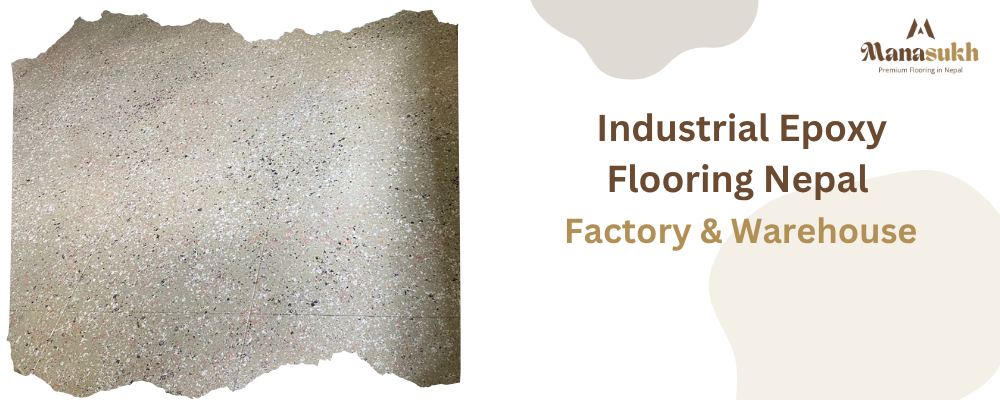
If your factory floor is cracking, absorbing oil, collecting dust, or getting damaged under heavy machines, you are not dealing with a maintenance problem. You are dealing with the wrong flooring. Concrete alone was never designed to handle industrial-level punishment, and if you are running a factory, warehouse, hospital, pharmaceutical unit, or parking area in Nepal, you already know this.
Industrial epoxy flooring has become the practical answer for industries across Nepal. From Kathmandu industrial zones to Biratnagar factories, Pokhara warehouses to Butwal processing plants, facility managers and business owners are switching to epoxy because it solves real problems that concrete cannot fix on its own.
This guide covers everything you need to know before making a decision: what epoxy flooring actually is, how it is installed, what it costs, how long it lasts, where it works best, and what questions to ask your contractor. No filler, no fluff, just the information that matters.
What is Industrial Epoxy Flooring?
Definition of Epoxy Flooring
Epoxy flooring is a surface coating system applied on top of a concrete base. It is made by combining two components: an epoxy resin and a hardener. When these two are mixed together, a chemical reaction starts that produces an extremely hard, seamless, and bonded surface. This is not paint. It is a coating that chemically fuses with the concrete substrate and forms a protective layer that is much stronger and more durable than anything you can brush or roll on.
How Industrial Epoxy Flooring Works
The process begins at the concrete surface. Before any epoxy is applied, the concrete must be prepared properly because epoxy bonds through chemical adhesion. A well-prepared surface allows the epoxy to penetrate into the pores of the concrete, creating a mechanical and chemical bond. Once cured, the result is a surface that performs as a single unified system rather than a coating sitting on top of the concrete.
In industrial applications, epoxy is applied in a system of layers. We work with a primer coat, a screed or build coat, and a topcoat. Each layer serves a specific purpose, and together they create the performance characteristics that industries need.
Why Industries Prefer Epoxy Flooring
Industries choose epoxy over plain concrete or other coatings because it handles what industrial environments actually demand. Heavy machines, constant foot traffic, forklift movement, chemical spills, water exposure, and hygiene requirements are all addressed in a single flooring solution. There is no equivalent that gives you the same combination of durability, chemical resistance, hygiene, and low maintenance cost at a comparable price point.
Why Industrial Epoxy Flooring is Growing in Nepal
Increasing Industrial Development in Nepal
Nepal’s manufacturing and logistics sectors have grown steadily over the last decade. New industrial corridors, expanded special economic zones, and increased investment in food processing, pharmaceuticals, and cold chain logistics have created demand for industrial infrastructure that performs to international standards. Facility owners who invested in proper flooring from the start have seen fewer maintenance shutdowns, cleaner audit results, and better operational efficiency.
Nepal’s Climate Challenges and Flooring Problems
Nepal’s climate creates specific flooring challenges that cannot be ignored. The monsoon season brings high humidity and moisture that penetrates untreated concrete, leading to surface deterioration, fungal growth, and efflorescence. Temperature changes between seasons cause concrete to expand and contract, which over time leads to cracking. In the Terai, heat combined with machine vibration accelerates concrete surface degradation. Epoxy addresses all of these issues when installed correctly on a properly prepared base.
Why Traditional Concrete Floors Fail in Industrial Settings
Bare concrete in an industrial environment does not last in the condition you need it to. The surface is porous, which means it absorbs oil, chemicals, and water. Once absorbed, these materials break down the concrete from inside. The surface generates fine dust constantly, which contaminates products, clogs machinery, and creates health issues for workers. A cracked or dusty concrete floor in a food plant or pharmaceutical unit is not just an operational inconvenience. It is a compliance failure.
Maintenance costs for untreated concrete also add up quickly. Frequent cleaning, patching, and grinding are stop-gap measures that address symptoms but not the root cause. Epoxy eliminates the root cause by sealing the surface entirely.
Major Benefits of Industrial Epoxy Flooring
High Durability for Heavy Industries
Industrial epoxy flooring is designed for environments where forklifts, heavy machinery, pallet jacks, and constant foot traffic operate daily. A properly installed epoxy system on M20 grade concrete can handle compressive loads, impact from dropped equipment, and abrasion from continuous movement without breaking down. The key is the combination of the concrete base strength and the epoxy system thickness. Starting from 3mm, the flooring provides meaningful protection. Thicker applications are specified for heavier industrial use.
Chemical and Oil Resistance
Most industrial facilities deal with chemical exposure at some level, whether it is cleaning agents, machine oils, solvents, or process chemicals. Plain concrete absorbs all of these. Epoxy forms a non-porous barrier that prevents chemical penetration. Spills sit on the surface and can be wiped away without leaving stains or causing damage. This is one of the primary reasons pharmaceutical units, automobile workshops, laboratories, and food processing plants choose epoxy over any other floor treatment.
Dust-Free and Hygienic Surface
Concrete dust is a serious problem in food and pharmaceutical industries. It contaminates product lines, causes respiratory issues, and leads to compliance failures during inspections. Epoxy creates a sealed, smooth, dust-free surface. In food plants and pharmaceutical facilities, this is not optional. It is a basic hygiene requirement, and epoxy is one of the most practical ways to meet it.
Easy Cleaning and Low Maintenance
The seamless nature of epoxy flooring means there are no joints, cracks, or pores where dirt and bacteria accumulate. Cleaning is straightforward. Regular sweeping and mopping with appropriate cleaning agents is sufficient for daily maintenance. There is no need for special equipment, aggressive chemicals, or frequent professional cleaning. This simplicity translates directly into reduced maintenance cost and labor over the life of the floor.
Waterproof and Moisture Resistant
Water infiltration through concrete causes long-term structural damage and creates surface deterioration. Epoxy’s non-porous surface prevents water from penetrating the floor. In areas like cold storage, commercial kitchens, and basement parking, where water exposure is constant, epoxy provides the waterproofing layer that concrete alone cannot offer.
Long-Term Cost Savings
The upfront cost of epoxy flooring is higher than leaving concrete bare. But the comparison has to be made over the useful life of the floor, not just the installation day. A properly installed epoxy floor requires minimal maintenance, lasts significantly longer than untreated concrete in industrial conditions, and avoids the ongoing costs of patching, cleaning, and lost productivity from floor-related shutdowns. Over five to ten years, the economics favor epoxy clearly.
Best Applications of Industrial Epoxy Flooring in Nepal
Manufacturing Factories
Factory floors face the hardest conditions. Heavy machines vibrate constantly, raw materials are dragged across the floor, oils and lubricants spill regularly, and forklifts run multiple shifts. Epoxy mortar systems or high-build epoxy coatings at 3mm and above are the standard recommendation for factory environments. The dust-free surface also improves product quality by reducing airborne contamination.
Warehouses and Logistics Centers
In warehouses, the main requirements are abrasion resistance, high visibility floor markings, and easy cleaning. Epoxy handles all three. The floor can be finished with contrasting colors for safety markings, aisle demarcations, and hazard zones. These markings become part of the floor rather than tape or paint that peels and fades.
Food Processing Plants
Food processing is one of the strictest environments for flooring. Hygiene requirements, washdown procedures with pressurized water, frequent chemical cleaning, and food safety regulations all point to seamless, non-porous, easy-to-clean epoxy floors. In food plants, the floor is also inspected as part of food safety compliance. A cracked or porous floor is a direct audit failure.
Pharmaceutical Industries
Pharmaceutical facilities require flooring that meets GMP (Good Manufacturing Practice) standards. This means seamless, dust-free, chemically resistant surfaces that can be sanitized effectively. Epoxy flooring is the standard choice for pharmaceutical production and storage areas in Nepal and internationally.
Hospitals and Laboratories
Hospitals and labs need floors that are hygienic, easy to disinfect, resistant to cleaning chemicals, and comfortable for long periods of standing and walking. Epoxy meets all of these requirements. In operating theaters and critical care areas, the anti-static variant prevents discharge that could interfere with medical equipment.
Defense and Airport Infrastructure
Defense facilities and airports operate under strict safety and operational requirements. Hangar floors, maintenance bays, and operational areas need floors that can handle heavy vehicles, fuel and oil exposure, and demanding operational tempos. Epoxy mortar systems with anti-slip surfaces are standard for these applications, offering the load capacity and chemical resistance these environments demand.
Automobile Workshops
Oil, fuel, brake fluid, and cleaning chemicals are daily occurrences in automobile workshops. Bare concrete in a workshop becomes permanently stained, slippery, and difficult to clean within months. Epoxy flooring in workshops is simple to clean, presents a professional appearance to customers, and genuinely improves safety by eliminating the oil-soaked concrete surface that causes slips.
Parking Areas and Basements
Parking floors need to handle vehicle traffic, oil drips, water from wet vehicles, and occasional fuel spills. Epoxy with an anti-slip aggregate is the right system here. In basement parking, the concrete is often subjected to water infiltration from above. Epoxy provides the waterproofing that prevents long-term moisture damage to the structure.
Commercial Kitchens and Cold Storage
Commercial kitchens combine heat, water, grease, and aggressive cleaning chemicals in a single space. Epoxy handles this combination better than tiles, which crack at grout joints, or painted concrete, which peels. Cold storage facilities benefit from the moisture resistance of epoxy and, where required, polyurethane topcoats that handle the thermal cycling without cracking.
Industrial Epoxy Flooring Installation Process
M20 Grade Concrete Requirement
This is a non-negotiable starting point. Epoxy flooring cannot compensate for a weak substrate. The concrete base must be M20 grade minimum, which means a compressive strength of 20 MPa. If the existing concrete is below this grade, it will fail under load regardless of how good the epoxy system is. Surface preparation and epoxy application done correctly on weak concrete will still result in a failing floor. Always confirm the concrete specification before proceeding.
Surface Inspection
Before any work begins, the floor is inspected thoroughly. We check for cracks, hollow spots, surface contamination, moisture levels, and existing coatings. A concrete floor that sounds hollow when struck with a hammer has delaminated or poorly bonded areas that must be removed and repaired. Moisture in the concrete is one of the leading causes of epoxy failure. If the moisture vapor emission rate is too high, a moisture barrier primer or specialist system is required.
Concrete Grinding and Preparation
The concrete surface must be mechanically prepared. We use diamond grinding machines to open the surface profile and remove any laitance, contamination, or weak surface layer. The International Concrete Repair Institute (ICRI) specifies surface profiles for different coating thicknesses. Grinding creates the correct profile for the epoxy to bond properly. Skipping or shortcutting this step is the most common cause of epoxy peeling and delamination.
Crack Repair and Surface Leveling
Any cracks in the concrete are cut, cleaned, and filled with epoxy filler or polyurea crack filler before the main coating is applied. Low spots are leveled using epoxy repair compounds. The goal is a flat, sound surface with no defects that could cause voids or weak spots under the coating system.
Primer Application
The primer is the first layer of the epoxy system and its job is to penetrate into the prepared concrete and create the primary bond. We use low-viscosity epoxy primers that flow into the surface pores of the concrete. The primer also acts as a moisture barrier and helps prevent off-gassing from the concrete that would otherwise cause bubbling in the subsequent coats. The primer must cure to the correct stage before the next coat is applied.
Screed and Build Coat Application
For industrial applications starting at 3mm, a screed or build coat is applied over the primer. This layer provides the bulk of the floor thickness and contributes to the mechanical and chemical resistance of the system. In epoxy mortar systems, aggregate is broadcast into the wet screed to create a high-strength composite layer. The thickness and formulation of this layer are determined by the loading requirements of the facility.
Topcoat and Finishing
The topcoat is the final wearing surface. It provides the surface finish, final chemical resistance, and, where required, anti-slip texture or anti-static properties. Topcoats are available in a range of finishes from high-gloss to satin to matt, and in custom colors. Floor markings and demarcation lines can be applied as part of this stage.
Drying and Curing Time
Epoxy systems are workable within 24 hours but full cure takes longer. Light foot traffic is typically possible after 24 hours. Vehicular traffic and heavy load is generally permitted after 5 to 7 days of curing at normal temperatures. In cooler conditions, curing time extends. The facility should plan for this downtime as part of the project schedule.
Common Installation Mistakes to Avoid
The most common failures in epoxy flooring come from insufficient surface preparation, applying epoxy on damp concrete, applying coats that are too thin, applying in unsuitable temperatures, and using low-quality materials to reduce cost. Each of these shortcuts creates a floor that fails prematurely. A floor installed correctly costs more upfront but does not fail. A floor installed incorrectly will need to be stripped and reinstalled, which costs far more than doing it right the first time.
How Much Does Industrial Epoxy Flooring Cost in Nepal?
Pricing Starting Point
Industrial epoxy flooring in Nepal starts from Rs. 300 per square foot for a 3mm epoxy system. This is the entry-level industrial specification and covers standard factory, warehouse, and commercial flooring requirements. This pricing includes the complete system: primer, screed, and topcoat applied on properly prepared M20 concrete.
Factors That Affect Pricing
Several factors influence the final cost of an industrial epoxy flooring project. The condition of the existing concrete affects preparation costs significantly. A floor with many cracks, soft areas, or heavy contamination requires more work to prepare. The total area of the project affects per-square-foot cost because mobilization and setup costs spread over a larger area. Accessibility of the space, required downtime, the type of epoxy system, and the finish requirements all influence the final figure. Get a site inspection before agreeing to any quote.
Why Low-Cost Epoxy Often Fails
There are cheap epoxy products available in the Nepalese market that are sold at prices that seem attractive. The problem is that industrial-grade epoxy performance requires industrial-grade material and proper installation. Low-solid-content paints marketed as epoxy coatings are not the same as a proper epoxy system. They offer minimal thickness, poor bond strength, and limited chemical resistance. When they fail, the cost of removal and reinstallation exceeds what was saved on the original material.
Long-Term Return on Investment
A properly installed epoxy floor at the right specification for your facility is a long-term investment. Reduced cleaning costs, eliminated concrete maintenance, fewer production disruptions due to floor damage, and compliance with hygiene standards all contribute to operational savings that accumulate over the years. When you calculate the cost per year over a 10-year lifespan, quality epoxy flooring is consistently more economical than patching concrete.
How Long Does Industrial Epoxy Flooring Last?
Average Lifespan
A properly installed industrial epoxy floor on M20 concrete with appropriate thickness for the application typically lasts 8 to 15 years. In lighter traffic commercial environments, lifespans above 15 years are achievable. In very heavy industrial environments with constant forklift traffic and chemical exposure, planned maintenance and periodic topcoat renewal extends the useful life of the system significantly.
Factors That Affect Durability
Substrate quality, installation quality, coating thickness, the specific chemical exposure, traffic load, and maintenance practices all affect how long the floor performs. A 3mm floor in a light industrial setting will last longer than a 3mm floor in a heavy chemical plant. Matching the specification to the actual demands of the environment is the most important decision in the process.
Maintenance Tips to Extend Lifespan
Regular cleaning with appropriate cleaning agents, prompt attention to spills, avoiding dragging sharp metal objects across the surface, and using floor protection under static heavy machinery all extend the floor’s life. Periodic inspection of the topcoat allows you to identify wear before it becomes a system failure, and targeted spot repairs or topcoat renewal can add years to the floor’s service life.
Signs Your Epoxy Floor Needs Repair
Delamination or peeling at edges or joints, visible cracks in the coating, surface pitting or chemical etching, loss of gloss in high-traffic areas, or soft spots that compress under foot are all signs that the floor needs professional attention. Addressing these early with targeted repair is far less expensive than allowing the damage to spread to a point where full reinstallation is required.
Our Warranty Policy
What is covered?
We provide a 1-year warranty on product debonding and chemical failure. If the epoxy system delaminates from the substrate or fails due to a chemical resistance deficiency within one year of installation, and the failure is determined to be a result of product or installation workmanship, we will address it. This warranty is tied to proper use and maintenance of the floor as guided at the time of handover.
What is Not Covered
Physical damage from sharp impacts, misuse, modifications to the floor, failure of the underlying concrete that was not present at the time of installation, and exposure to chemicals beyond the specified resistance range of the product are outside the scope of the warranty. This is why we provide only a 1-year warranty. Industrial environments are demanding and unpredictable, and honesty about what is and is not within our control benefits both parties. The 1-year warranty reflects confidence in our installation quality and the product performance under normal operating conditions.
Why Honest Warranty Terms Matter
Some contractors offer extended warranties that look attractive but exclude most real-world failure modes in the fine print. Our approach is to be straightforward about what we stand behind. A 1-year warranty on debonding and chemical failure is a genuine commitment, not a marketing promise with exceptions that eliminate all coverage. We invest in proper surface preparation and the right products specifically because we take that commitment seriously.
Common Problems with Industrial Epoxy Flooring
Peeling or Delamination
Peeling is almost always caused by inadequate surface preparation, application on damp concrete, or using a primer that is not suitable for the concrete condition. When the bond between the epoxy and concrete fails, the coating lifts. This is a workmanship failure, not a material failure, in most cases. Proper grinding, moisture testing, and correct primer selection prevent this entirely.
Bubbling Issues
Bubbles in the coating are caused by air or moisture vapor escaping from the concrete during or after application. This happens when the concrete surface is not properly sealed, when application occurs in extreme heat, or when the concrete has a high moisture vapor emission rate. Using a low-viscosity primer that seals the surface and applying coats in appropriate temperature conditions prevents bubbling.
Cracking Problems
Cracks in epoxy flooring that are not aligned with existing cracks in the concrete below are generally a sign of insufficient coating thickness or a system applied on concrete that is moving or shifting. Any cracking in the concrete substrate should be properly repaired before coating. Cracks that reflect through from the substrate need crack-bridging treatments.
Slippery Surface Concerns
Smooth gloss epoxy can become slippery when wet. This is a design choice issue, not a material failure. Anti-slip aggregate can be incorporated into any epoxy system at the time of installation to provide the required level of grip. If you are specifying flooring for an area with water or liquid exposure, always specify anti-slip texture.
Industrial Epoxy Flooring Maintenance Guide
Daily Cleaning Tips
Sweep or vacuum the floor daily to remove debris and grit that can act as abrasive particles under foot traffic and equipment. Mop with a neutral pH cleaner and warm water for regular cleaning. Avoid acidic or highly alkaline cleaners on standard epoxy as prolonged exposure can dull the surface. Wipe up chemical spills promptly rather than allowing them to sit.
Maintenance Schedule for Factories
Daily sweeping and spot cleaning, weekly mopping with appropriate cleaner, monthly inspection of surface condition, and annual professional inspection and assessment of topcoat condition is a practical maintenance schedule for most industrial facilities. High-traffic areas may need more frequent inspection and targeted maintenance.
Heavy Machinery Precautions
Place rubber or plastic pads under static heavy machinery to distribute the load and prevent point-load stress on the coating. For equipment that is frequently moved, ensure the casters or wheels are in good condition. Flat casters with a large contact area cause less wear than small hard casters. Never drag sharp metal edges across the epoxy surface.
How to Choose the Best Epoxy Flooring Contractor in Nepal
Experience and Past Projects
Ask to see past industrial projects. A contractor who has worked in factories, pharmaceutical plants, and warehouses understands the specific requirements of each environment. Look for documented experience, not just claims. If a contractor cannot show you projects they have completed, that is a meaningful signal.
Material Quality
Ask specifically what products are being used, including the brand and technical data sheets. Industrial-grade epoxy has published technical specifications including compressive strength, chemical resistance, tensile adhesion, and minimum application thickness. If the contractor cannot provide this information, the material quality cannot be verified.
Questions to Ask Before Hiring
- What is the minimum concrete grade required, and will you test the existing slab?
- What surface preparation method do you use, and what profile will you achieve?
- What is the total dry film thickness of the system being installed?
- What is the warranty coverage, and what specifically is excluded?
- What is the expected lead time from surface preparation to full cure?
- What cleaning and maintenance products should not be used on the finished floor?
Red Flags to Avoid
Contractors who do not perform surface grinding before application, who cannot specify the DFT (dry film thickness) of their system, who offer extremely low prices without explaining why, who cannot produce technical data sheets for the products they use, or who pressure you to make a quick decision without a proper site inspection are all red flags. The flooring industry in Nepal has contractors who cut corners. The failures show up within months.
Why Professional Installation Matters
The performance of an epoxy floor is determined more by the installation than by the material. The same product installed correctly on a properly prepared substrate will outlast the same product installed on a surface that was brushed clean and primed without grinding. Surface preparation expertise, moisture testing, correct product selection for the specific environment, and quality control during application are not skills that can be improvised. They come from doing this work repeatedly and understanding why each step matters.
When the floor fails, it usually fails because someone cut a corner that was not visible at the time. Professional installation is about process discipline, not just product quality. That is what we bring, and it is why we can stand behind a warranty on debonding and chemical failure.
Eco-Friendly Benefits of Epoxy Flooring
Epoxy flooring’s long service life means less material consumption over time compared to flooring systems that require frequent replacement. The dust-free surface reduces airborne particulate matter in the facility, which improves air quality for workers. The high-gloss versions improve light reflection, which reduces artificial lighting requirements in some facilities. And because epoxy is applied as a thin system over existing concrete rather than requiring complete floor demolition and replacement, the waste generated is minimal compared to full floor replacement projects.
Future of Industrial Flooring in Nepal
As Nepal’s industrial sector continues to grow and as international quality and safety standards become more common requirements for export markets and multinational partnerships, the demand for proper industrial flooring will increase. Facilities that are investing in pharmaceutical, food processing, and logistics infrastructure are already finding that their floor specification is reviewed as part of quality audits and partner assessments.
The trend in advanced markets is toward flooring systems that integrate hygiene performance, safety features, and sustainability. These are directions the Nepalese industrial flooring market will move toward as awareness and standards develop. Investing in a quality system now means your facility is already aligned with where the industry is heading.
Frequently Asked Questions
What is the cost of industrial epoxy flooring in Nepal?
Industrial epoxy flooring in Nepal starts at Rs. 300 per square feet for a 3mm system including primer, screed, and topcoat. The price varies depending on the total area, concrete condition, specific type of epoxy required, and any special requirements such as anti-static or chemical resistance. A site inspection is needed to provide an accurate quote for your specific project.
What concrete grade is required before applying epoxy?
M20 grade concrete is the minimum requirement. This means a compressive strength of 20 MPa. Applying epoxy on concrete below this grade will result in failure, because the substrate cannot support the loads that the facility places on the floor, and the epoxy system cannot compensate for a weak base.
How long does epoxy flooring last?
A properly installed industrial epoxy floor typically lasts 8 to 15 years depending on the traffic, chemical exposure, and maintenance practices in the facility. With regular maintenance and periodic topcoat renewal, the useful life can extend significantly beyond this range.
Is epoxy flooring suitable for factories?
Yes. Factory floors are one of the primary applications for industrial epoxy flooring. The combination of durability under machine and forklift loads, chemical and oil resistance, dust-free surface, and low maintenance makes epoxy the practical choice for manufacturing environments.
Can epoxy flooring handle heavy machinery?
Yes, within the correct specification. The load capacity of the floor system depends on the concrete base grade, the epoxy system type, and the thickness. Starting from 3mm on M20 concrete, the system handles significant loads. For very heavy or impact-heavy environments, thicker epoxy mortar systems are specified. Surface preparation is also critical because even the best epoxy system fails if the concrete base is not sound.
Is epoxy flooring slippery?
Smooth gloss epoxy can be slippery when wet. Anti-slip aggregate can be incorporated into the system during installation to provide grip in wet or oily conditions. If your facility involves water, oil, or other liquids on the floor, always specify anti-slip texture. The level of slip resistance can be adjusted based on the safety requirements of the space.
How many days does installation take?
A typical industrial epoxy flooring project takes 3 to 5 working days depending on the area size and system specification. Surface preparation, primer application, screed application, and topcoat application each require time and curing intervals between layers. Light foot traffic is possible after approximately 24 hours. Full vehicular and equipment traffic is typically permitted after 5 to 7 days of curing.
Can old concrete floors be coated with epoxy?
Yes, provided the existing concrete meets the M20 grade requirement and is structurally sound. Old concrete with contamination, existing coatings, cracks, or soft surfaces requires thorough preparation before epoxy can be applied. Delaminated, crumbling, or sub-grade concrete needs to be repaired or replaced before the epoxy system is installed.
Which industries benefit most from epoxy flooring?
Manufacturing factories, warehouses, pharmaceutical units, food processing plants, hospitals, laboratories, automobile workshops, parking areas, cold storage facilities, and defense and airport infrastructure are the primary applications in Nepal. Any facility that needs a durable, hygienic, chemical-resistant, and low-maintenance floor surface is a candidate for industrial epoxy flooring.
What thickness is best for industrial flooring?
Starting from 3mm is the minimum for genuine industrial performance. Heavier applications such as forklift-heavy warehouses, epoxy mortar systems in chemical plants, or high-impact manufacturing areas typically use 4mm to 6mm or more. The right thickness is determined by the specific demands of the facility. A site assessment is the correct way to determine the specification for your project.
What is your warranty policy?
We provide a 1-year warranty covering product debonding and chemical failure. If the floor delamination or chemical resistance failure is the result of the installed system within the first year, we address it. Physical damage from misuse, modification, or failures in the underlying concrete structure are outside the scope of this warranty. We are transparent about these limits because we want our clients to know exactly what they are getting.
Conclusion
Industrial epoxy flooring is not a luxury upgrade. For factories, warehouses, pharmaceutical plants, hospitals, food processing facilities, and parking areas in Nepal, it is the practical, durable answer to flooring challenges that plain concrete cannot solve. The combination of a sound M20 concrete base, professional surface preparation, and a properly specified epoxy system delivers a floor that performs reliably for years with minimal maintenance.
The decision comes down to specification, installation quality, and contractor honesty. Starting from Rs. 300 per square foot for a 3mm industrial system, with a clear 1-year warranty on product debonding and chemical failure, the investment is well-defined. The return is a facility that runs cleaner, safer, and with fewer floor-related interruptions than one built on bare concrete.
If you are planning a new facility or upgrading an existing one, the right step is a proper site inspection before any commitment. The concrete grade, surface condition, moisture levels, and specific demands of your operations all feed into the correct specification. Get that assessment done first, and everything else follows logically.
Contact us for a free site inspection and quotation for your factory, warehouse, hospital, or commercial facility anywhere in Nepal.