
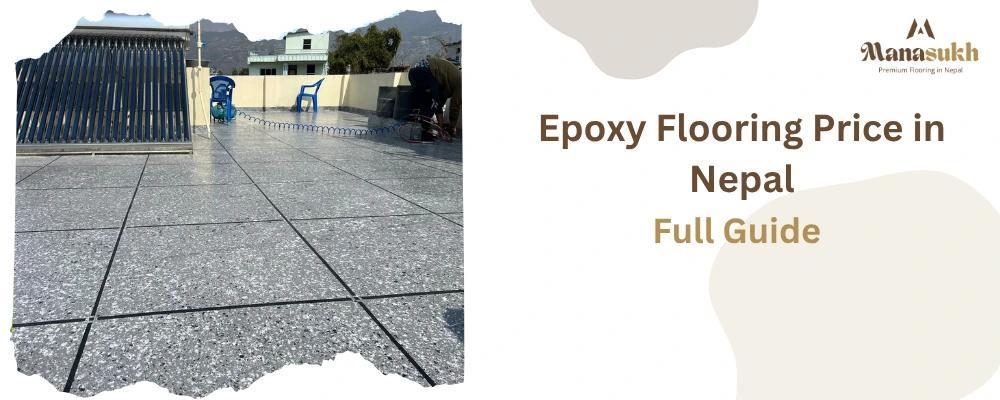
If you are planning to install epoxy flooring in Nepal for your home, office, or warehouse and wondering about the epoxy flooring price in Nepal, you have landed on the right page.
Whether you are a homeowner in Kathmandu looking for a glossy kitchen floor, a restaurant owner in Pokhara wanting a durable surface, or an industrial buyer in Lalitpur upgrading a factory floor, this guide breaks down everything you need to know: current pricing, types, cost factors, and real-world examples.
Let’s get straight into it.
What is Epoxy Flooring?
Epoxy flooring is a high-performance surface coating made by combining epoxy resin with a hardening agent. When applied to a concrete base, it forms an extremely tough, smooth, and chemically resistant surface that can last for decades with minimal maintenance.
It is widely used across Nepal in the following:
- Homes – kitchens, garages, living rooms
- Hospitals & clinics – for hygienic, easy-to-clean surfaces
- Restaurants & showrooms – for aesthetic appeal and durability
- Factories & warehouses – for heavy-duty industrial floors
- Parking lots & commercial spaces – for anti-slip safety
Key benefits of epoxy flooring include:
- Exceptional durability — resists heavy foot traffic, machinery, and impact
- Glossy, attractive finish — adds a premium look to any space
- Chemical & moisture resistance — ideal for Nepal’s humid monsoon climate
- Easy to clean — no grout lines, seamless surface
- Cost-effective long-term — lower maintenance vs tiles or concrete
Epoxy Flooring Price in Nepal (Per Sq Ft / Sq Meter) – 2026
Epoxy flooring price in Nepal is generally calculated per square foot or per square meter, and the cost varies depending on quality, thickness, and application requirements. According to different sources, the average epoxy flooring price in Nepal ranges from around NPR 250 to NPR 800 per square foot, while some providers offer basic installations starting at about NPR 210 per sq ft for standard finishes.
When converted to square meter rates, prices can vary widely depending on the system type, typically ranging from NPR 300 to NPR 1500 per sqm for materials alone, with decorative or heavy-duty systems costing more. The final cost depends on several factors such as surface preparation, type of epoxy coating, floor condition, labor charges, and project size, which all contribute to the overall price variation.
Prices may vary depending on site condition, floor area, design complexity, and material brand. Always get a site visit quote before finalizing.
Price Variation by City:
- Kathmandu & Lalitpur: Slightly higher due to labor demand and premium material availability
- Pokhara & Chitwan: Comparable pricing; slight variation based on material transport cost
- Remote areas: Add NPR 20–50 per sq ft for transportation and logistics
Types of Epoxy Flooring & Their Costs in Nepal
Epoxy flooring in Nepal comes in several types, and each type has a different price range depending on durability, thickness, and design. According to multiple sources, thin-coat epoxy (epoxy paint) is the most basic and affordable option, typically costing around NPR 500–1000 per square meter with installation, making it suitable for light-duty residential use. Standard epoxy coating is slightly thicker and more durable, costing about NPR 700–1500 per sqm, commonly used in garages and small commercial areas. For smoother and more professional finishes, self-leveling epoxy flooring is widely used in showrooms, hospitals, and factories, with costs ranging from NPR 1000 to 2500 per sqm. Decorative options like metallic or epoxy flake flooring—known for aesthetic appeal—are more expensive, usually between NPR 1500–3500 per sqm. For industrial environments, heavy-duty epoxy mortar flooring is the strongest type and can cost around NPR 2000–5000 per sqm due to its high resistance to chemicals and heavy loads.
Other classifications of epoxy flooring include tile-style epoxy flooring, each designed for specific uses such as slip resistance, static control, or smooth finishes. Overall, the cost variation in Nepal depends mainly on the type of epoxy system, surface preparation, thickness, and labor involved, which significantly influence the final price per square foot or square meter. This 1 mm epoxy flooring in Nepal costs NRs. 200 per square feet.
Factors Affecting Epoxy Flooring Price in Nepal
Understanding what drives the cost helps you plan better and avoid surprise bills. Here are the six key factors that determine your final epoxy flooring cost in Nepal:
1. Floor Condition (Existing Surface)
A brand-new, smooth concrete slab requires minimal prep work. An old, cracked, or contaminated floor needs grinding, crack filling, and multiple primer coats—adding NPR 30–80 per sq ft to the total cost. Always factor this in for renovation projects.
2. Coating Thickness
Thicker coats mean better durability but higher material usage. A standard residential coating is 1–2 mm, while an industrial-grade one is 4–6 mm. Each additional millimeter adds approximately NPR 40–60 per sq ft to the cost.
3. Total Floor Area
Larger areas almost always come at a lower per-sq-ft rate. Contractors in Kathmandu and Lalitpur often offer 10–20% discounts on areas over 2,000 sq ft. Always ask about bulk pricing.
4. Labor Cost in Nepal
Skilled epoxy applicators charge NPR 40–100 per sq ft depending on experience and the complexity of the design. Experienced teams with proper mixing equipment may charge more, but the finish quality justifies it — a poorly mixed or rushed job can peel or bubble within months.
5. Material Quality – Imported vs Local
Imported epoxy brands (Sika, Fosroc, Bostik, Mapei) cost more than locally blended options but offer superior adhesion, UV stability, and color retention. For high-traffic or chemical-exposed areas, always choose imported-grade material.
6. Design Complexity
A plain single-color floor is the cheapest option. Adding custom patterns, metallic effects, company logos, or multi-color zones increases both material cost and skilled labor time significantly.
Epoxy Flooring vs Tiles vs Concrete in Nepal (Cost Comparison)
Not sure if epoxy is the right choice? Here is how it stacks up against the two most common alternatives:
| Parameter | Epoxy Flooring | Ceramic/Vitrified Tiles | Plain Concrete |
| Initial Cost (per sq ft) | NPR 120 – 600 | NPR 100 – 500+ | NPR 60 – 120 |
| Annual Maintenance Cost | Very Low | Low–Medium | Medium–High |
| Lifespan | 10–20+ years | 15–25 years | 5–10 years (surface) |
| Dust & Chemical Resistance | Excellent | Good (with grout issues) | Poor |
| Moisture Resistance | Excellent | Good | Poor |
| Aesthetics / Finish | Premium, seamless | Varies | Plain/dull |
| Best For | Industrial, commercial, premium homes | Homes, offices | Basic utility use |
Epoxy flooring offers the best combination of aesthetics, durability, and long-term value for commercial and industrial use. For purely residential budgets, standard tiles remain popular, but metallic or self-leveling epoxy is fast becoming the preferred upgrade.
Is Epoxy Flooring Worth It in Nepal?
Absolutely — and here is why it makes particular sense in the Nepali context:
- Monsoon Resilience: Nepal’s heavy rainfall creates moisture and humidity that damage untreated concrete floors. Epoxy’s seamless, waterproof surface prevents seepage and mold growth.
- Dust-Free Environment: Kathmandu’s notorious dust problem is significantly reduced with epoxy floors — concrete sheds fine dust particles; sealed epoxy does not.
- Long-Term Savings: A well-installed epoxy floor in a Nepali warehouse or showroom can last 15–20 years with minimal re-coating. Tile floors require grout replacement, crack repairs, and eventual re-laying.
- Growing Demand = Better Contractors: Nepal’s epoxy flooring industry has matured significantly in the last 5 years. Skilled applicators and quality imported materials are now easily accessible in Kathmandu, Pokhara, and Lalitpur.
Tips to Reduce Epoxy Flooring Cost in Nepal
- Choose a simpler design: A single-color or two-tone floor is significantly cheaper than metallic or 3D designs. Save the premium design budget for feature areas only.
- Prepare the surface yourself: If you can ensure the floor is clean, dry, and free from oil contamination before the contractor arrives, you can reduce prep charges.
- Bundle multiple areas: Covering your garage, basement, and terrace together in one project can fetch a 10–20% bulk discount from most contractors.
- Compare at least 3 quotes: Pricing varies considerably between contractors in Nepal. Get written quotes from multiple vendors — not just WhatsApp estimates.
- Time your project off-season: Avoid the peak construction season (March–May). Scheduling during the monsoon or winter months can yield better contractor rates.
How to Choose the Best Epoxy Flooring Contractor in Nepal
Finding the right contractor is as important as choosing the right epoxy type. Here is what to look for:
- Ask to see a portfolio of completed projects (photos or site visits)
- Verify they use moisture meters before application — moisture in the slab causes peeling
- Confirm the brand of epoxy material being used — ask for the product datasheet
- Get a written warranty: reputable contractors offer 2–5 year workmanship guarantees
- Check if they include a dedicated primer coat — skipping primer is a common cost-cutting shortcut that drastically reduces lifespan
- Ask about the number of coats: a 3-coat system (primer + body coat + topcoat) is the industry standard
Pro Tip: Search for contractors with verifiable projects in major Nepali cities — Kathmandu, Lalitpur, Bhaktapur, Pokhara, Biratnagar. Companies with physical showrooms or office addresses tend to be more accountable.
Frequently Asked Questions (FAQs)
What is the average epoxy flooring cost in Nepal?
The average epoxy flooring price in Nepal ranges from NPR 120 to NPR 600 per sq ft depending on the type, floor area, surface condition, and design. For a standard self-leveling epoxy in a residential space, budget approximately NPR 200–280 per sq ft all-inclusive.
How long does epoxy flooring last in Nepal?
A professionally installed epoxy floor in Nepal typically lasts 10–20 years in residential settings and 5–15 years in high-traffic industrial environments. Longevity depends on the quality of the base concrete, coating thickness, and maintenance.
Is epoxy flooring good for homes in Nepal?
Yes — especially for garages, kitchens, and basements. Epoxy is seamless (no grout lines that trap bacteria), moisture-resistant, and easy to clean, making it ideal for Nepal’s humid climate. Metallic epoxy is increasingly popular for living rooms and master bedrooms in premium Nepali homes.
Can epoxy be applied on old concrete floors?
Yes, but preparation is critical. Old concrete must be diamond-ground to remove existing coatings, cracks must be filled, and the surface must be completely dry (under 4% moisture). Skipping proper prep is the number one cause of epoxy failure in Nepal.
What is the difference between epoxy paint and epoxy flooring?
Epoxy paint is a thin decorative coating (less than 0.5 mm) that improves appearance but offers limited durability. True epoxy flooring is a thick resin system (1–6 mm) that bonds chemically with the concrete and provides structural protection. In Nepal, many low-cost providers use epoxy paint — always ask for the material data sheet.
Does epoxy flooring work in Nepal’s monsoon climate?
Absolutely. Once cured, epoxy flooring is completely waterproof and handles high humidity well. The key caveat is application — epoxy must never be applied during active monsoon when ambient humidity is extremely high (above 85%), as moisture interferes with curing.
Conclusion
Epoxy flooring in Nepal is no longer a luxury reserved for five-star hotels and multinational factories. With prices starting at NPR 120 per sq ft for standard coatings and a growing network of skilled contractors across Kathmandu, Pokhara, and Lalitpur, it has become a practical, high-value investment for homes, businesses, and industries alike.
Whether you are upgrading your Kathmandu showroom, waterproofing your Pokhara restaurant kitchen, or installing a durable floor in your Lalitpur warehouse epoxy flooring delivers lasting value.
| 📞 Ready to Get a Quote? Contact a Manasukh Flooring today. Tell us your floor area, location, and preferred epoxy type and we will connect you with the right professional. |