
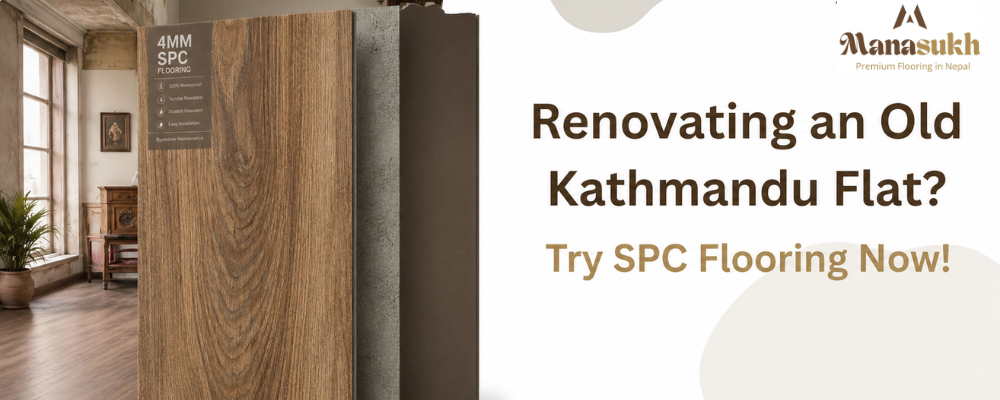
If you’re staring at cracked tiles, a musty subfloor, or that stubborn damp patch near the kitchen wall, here’s the short answer: SPC flooring fixes almost all of it. It’s 100% waterproof, handles Kathmandu’s humid summers and cold winters without warping, and installs directly over most old floors in a few days, no demolition required. That’s the whole pitch. Now let’s get into why it actually works.
What Exactly Is SPC Flooring?
SPC stands for Stone Plastic Composite. Think of it as vinyl flooring’s tougher, more grown-up cousin. It’s built from a rigid core of limestone powder and PVC resin, topped with a design layer and a wear layer that resists scratches and stains.
Here’s what that means in plain terms:
- Stone core: gives it rigidity and stability, so it doesn’t flex or bow
- Plastic binder: makes it fully waterproof, not just water-resistant
- Composite build: lets manufacturers print realistic wood, marble, or concrete finishes on top
You get the warmth of hardwood or the polish of stone, minus the maintenance headaches of either.
Why Old Flats in Kathmandu Specifically Need This
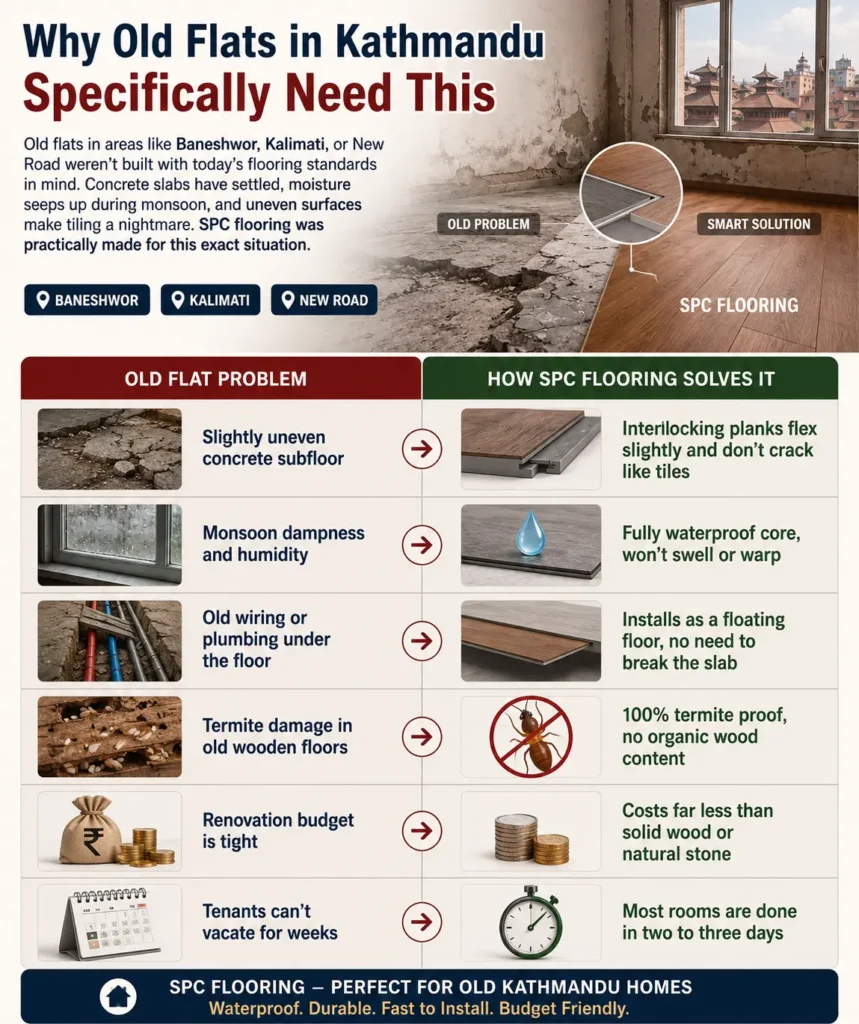
Old flats in areas like Baneshwor, Kalimati, or New Road weren’t built with today’s flooring standards in mind. Concrete slabs have settled, moisture seeps up during monsoon, and uneven surfaces make tiling a nightmare. SPC flooring was practically made for this exact situation.
| Old Flat Problem | How SPC Flooring Solves It |
|---|---|
| Slightly uneven concrete subfloor | Interlocking planks flex slightly and don’t crack like tiles |
| Monsoon dampness and humidity | Fully waterproof core, won’t swell or warp |
| Old wiring or plumbing under the floor | Installs as a floating floor, no need to break the slab |
| Termite damage in old wooden floors | 100% termite proof, no organic wood content |
| Renovation budget is tight | Costs far less than solid wood or natural stone |
| Tenants can’t vacate for weeks | Most rooms are done in two to three days |
Is SPC Flooring Actually Worth It for Kathmandu’s Climate?
Yes, and this is where it earns its reputation. Kathmandu swings between muggy monsoon months and dry, chilly winters, and that temperature and humidity shift is exactly what damages traditional wood and laminate floors over time.
SPC flooring holds up because it:
- Won’t expand, contract, or buckle when temperatures shift
- Resists mold and mildew growth in damp corners
- Handles spills in kitchens and bathrooms without staining
- Stays stable under heavy furniture and daily foot traffic
For a city where basement dampness and seasonal humidity are just part of life, that stability alone justifies the switch.
SPC Flooring vs Other Options: A Quick Comparison
If you’re weighing your choices before committing, here’s how SPC stacks up against what’s already common in Kathmandu renovations.
| Flooring Type | Approx. Price per Sq Ft (Installed) | Waterproof | Best For |
|---|---|---|---|
| SPC Flooring | NPR 250 to NPR 600 | Yes | Living rooms, bedrooms, kitchens, old flats |
| Ceramic Tiles | NPR 160 to NPR 500 | Yes | New builds, bathrooms |
| Laminate (HDF) | NPR 230 to NPR 430 | No | Dry bedrooms only |
| Solid Wood | NPR 300 to NPR 1,200 | No | Premium living rooms |
| Vinyl Sheet | NPR 140 to NPR 350 | Partial | Budget rentals |
Note: prices vary by brand, thickness, and supplier, so always get a couple of quotes before you commit.
What Does a Real Renovation Look Like?
Most Kathmandu homeowners renovating an old flat follow a similar pattern once they switch to SPC. The subfloor gets a quick clean and level check, the planks acclimate to the room for a day or two, and installation happens without touching the plumbing or wiring underneath. Rooms that used to take a week of tile work with grout drying time are often walkable the same day installation finishes.
The most common feedback from these renovations comes down to three things: the floor feels warmer underfoot than tile, the room looks noticeably brighter with lighter wood-look finishes, and there’s no lingering cement or grout dust to clean up afterward.
How Is SPC Flooring Installed?
You don’t need to break your existing floor to install SPC. Here’s the general process:
- Inspect and clean the existing subfloor, removing loose debris
- Let the planks acclimate to room temperature for 24 to 48 hours
- Lay underlayment if the supplier recommends one for sound reduction
- Click and lock the planks together, staggering joints for strength
- Leave an expansion gap of a few millimeters along the walls
- Finish with skirting or baseboards to cover the gap and complete the look
Most installers can finish an average size bedroom or living room in a single day.
Design Ideas Worth Considering
SPC flooring opens up options that old tile floors simply can’t match. A few directions homeowners are leaning into for Kathmandu renovations:
- Warm oak or saal wood finish for living rooms, paired with light curtains to brighten a north facing flat
- Grey stone look for kitchens and entryways, which hides scuffs better than white tile
- Herringbone laid planks in a home office or study for a subtle upgrade that photographs well
- Consistent flooring across rooms to make a small old flat feel larger and more connected
Frequently Asked Questions
Does SPC flooring work on old, slightly uneven concrete floors? Yes. Minor unevenness is fine since the planks float above the subfloor and have some natural flex. For major dips or slopes, a self leveling compound is recommended first.
Will SPC flooring smell or off gas after installation? Quality SPC flooring has very low VOC emissions and any faint initial smell typically fades within a day or two of ventilation.
Can I install SPC flooring myself? Many homeowners do, thanks to the click lock system. That said, professional installation ensures tight seams and proper expansion gaps, especially in older flats with uneven walls.
How long does SPC flooring actually last? With normal residential use, SPC flooring typically lasts 15 to 25 years, often longer than tile grout stays intact.
Is SPC flooring worth it compared to just re-tiling? For old flats with damp or uneven subfloors, yes. You avoid the labor, dust, and time of tile removal, and you get a fully waterproof result at a comparable or lower cost.
Ready to Transform Your Old Flat?
If your renovation checklist includes damp corners, cracked tiles, or a floor that just looks tired, SPC flooring is worth a serious look before you commit to anything else. Reach out to a trusted local flooring supplier for a site visit and a straightforward quote based on your flat’s actual condition, not a generic estimate. Your old flat deserves a floor that can keep up with Kathmandu’s weather for the next two decades, not just the next two years.