
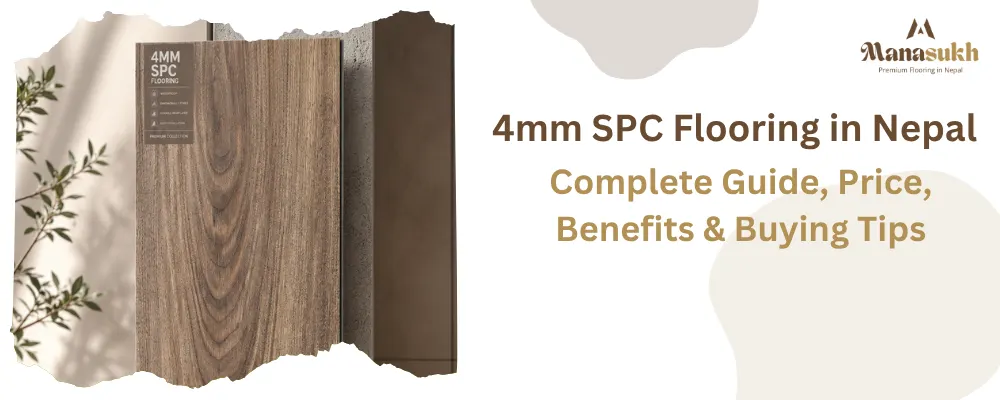
What is 4mm SPC Flooring?
SPC Flooring Meaning and Composition
SPC stands for Stone Plastic Composite (also called Stone Polymer Core). It is an advanced category of rigid-core vinyl flooring engineered from a blend of natural limestone powder, polyvinyl chloride (PVC), and stabilizers. The result is a plank that is denser, more dimensionally stable, and far more resilient than ordinary vinyl or laminate.
A standard 4mm SPC plank is made up of four distinct layers:
- UV Coating — the topmost transparent shield that protects colour and finish from sunlight and fading.
- Wear Layer — a clear, tough film measured in mils (thousandths of an inch) that handles daily foot traffic, scratches, and stains.
- SPC Core — the heart of the plank; a rigid limestone-PVC blend that gives the floor its stability, waterproof character, and dent resistance.
- Pre-attached Underlay — a thin foam or cork backing that adds slight cushion, reduces impact noise, and helps the floor lay flat.
Why 4mm Thickness is Popular in Nepal
Nepal’s housing stock is heavily composed of reinforced concrete slabs both in Kathmandu valley apartments and in the growing urban centres of Pokhara, Chitwan, and Butwal. Concrete subfloors are hard, cold, and unforgiving. A 4mm SPC plank strikes the ideal balance: it is thick enough to absorb minor subfloor imperfections and provide underfoot comfort, yet slim enough not to raise door clearances to a problematic level or create trip hazards at room transitions.
Compared to 6mm or 8mm options, 4mm SPC is also lighter per box, making it significantly easier for workers to carry up the narrow staircases typical of Nepali buildings. Cost-efficiency is the third driver 4mm delivers full waterproof and scratch-resistant performance at a lower price per square foot.
Difference Between SPC, Vinyl, and Laminate Flooring
| Feature | SPC Flooring | Luxury Vinyl (LVP) | Laminate |
| Core material | Stone + PVC rigid | Flexible PVC foam | HDF wood fibre |
| Waterproof | 100% yes | Yes (surface only) | No, swells with moisture |
| Stability in heat | Excellent | Moderate | Poor |
| Thickness range | 3.5mm–8mm | 2mm–5mm | 7mm–12mm |
| Suitable for Nepal monsoon | Yes | Partially | No |
| Subfloor tolerance | Moderate | Low | Low |
| Lifespan (average) | 15–25 years | 10–15 years | 8–12 years |
Why 4mm SPC Flooring is in Demand in Nepal
Suitability for Nepal’s Climate Conditions
Nepal experiences significant temperature variation from below 0°C in the hills in winter to above 38°C in the Terai during summer. Most flooring materials expand and contract with this thermal swing, eventually buckling or gapping. SPC’s stone-composite core has a very low thermal expansion coefficient, meaning it stays dimensionally stable across the full seasonal range. This is the single biggest reason professional interior designers in Kathmandu now specify SPC over laminate for long-term projects.
Waterproof Performance in Monsoon Season
Nepal’s monsoon (June–September) brings prolonged humidity, frequent surface water, and persistent moisture seeping through ground-floor concrete. For any porous material wood, HDF laminate, ceramic grout joints this is a recipe for warping, mould, and structural damage. SPC is 100% waterproof at its core. Water cannot penetrate or swell it. You can mop it freely, and even a minor flood does not permanently damage an SPC floor if dried within a reasonable time.
Durability for Residential and Commercial Use
The wear layer on a quality 4mm SPC plank typically ranges from 0.3mm to 0.5mm. This hardened film resists furniture legs, pet claws, dropped objects, and high-heeled shoes all common hazards in both homes and commercial spaces. In busy Kathmandu retail environments, an SPC floor can handle the kind of rolling foot traffic that would visibly wear a laminate floor within two to three years.
Low Maintenance Advantage for Busy Households
Unlike ceramic tiles, SPC has no grout lines to discolour or trap bacteria. Unlike polished wood, it needs no periodic sanding, waxing, or sealing. A weekly sweep and a damp mop with a mild pH-neutral cleaner is all that is required to keep it looking new. For the increasingly time-poor urban families of Kathmandu, this is a meaningful quality-of-life benefit.
Key Features of 4mm SPC Flooring
Scratch Resistance and Impact Strength
The wear layer on premium SPC is rated at AC3 to AC4 on the Abrasion Class scale, meaning it can withstand moderate-to-heavy commercial traffic without visible scratching under normal use. The rigid stone core beneath absorbs impact shock, preventing the denting that soft-core vinyl suffers when heavy objects are dropped.
Fire Resistance and Safety Aspects
SPC flooring carries a Class B1 or Class B2 fire rating under standard testing it is classified as fire-retardant, meaning it will not actively fuel a fire. Unlike some cheaper vinyl products, premium SPC does not drip burning material when exposed to flame, an important safety consideration for multi-storey residential and commercial buildings.
Anti-Slip Surface for Homes and Offices
The embossed texture of SPC planks provides a coefficient of friction well above the R9 anti-slip rating recommended for residential and light commercial use. This makes SPC a sensible choice for households with elderly family members or young children, as well as offices and hotel corridors where spills can occur.
UV Resistance and Colour Stability
The UV-cured coating on the top surface prevents the photodegradation that causes cheaper flooring to yellow or fade near windows. In a Kathmandu apartment with large south-facing windows, or a Terai home with intense sun exposure, this translates to colour that remains vibrant for the full lifespan of the floor.
Eco-Friendly and Low VOC Materials
Premium SPC flooring is manufactured to emit very low levels of volatile organic compounds (VOCs) — chemical off-gases that can affect indoor air quality. Responsible suppliers provide FloorScore or GREENGUARD certifications. The absence of formaldehyde-based adhesives in the floating click-lock installation also contributes to better indoor air quality compared to glue-down options.
4mm SPC Flooring Price in Nepal
Transparent All-Inclusive Rate: Rs. 215 per square foot includes material, professional labour, 2mm preform and VAT. No surprise add-ons.
This premium product is available in a single, carefully selected colour. This is a deliberate design choice — by offering one signature look instead of dozens of options, quality control is maintained at the highest level and stock is always available without long lead times.
Factors Affecting SPC Flooring Cost
- Wear layer thickness — thicker layers cost more but last significantly longer.
- Core density — higher limestone content means greater rigidity and durability.
- Underlay quality — pre-attached IXPE or cork underlays add cost but improve comfort and sound.
- Room geometry — irregular rooms with many cuts waste more material, increasing effective cost.
- Existing floor condition — demolition of old tiles or levelling of very uneven subfloors adds labour cost.
Imported vs Local Supply Pricing Differences
Nearly all SPC flooring sold in Nepal is imported — primarily from China, with smaller volumes from India, South Korea, and Europe. Chinese-manufactured SPC can be excellent quality when sourced from reputable certified factories, or poor quality when cut-rate production corners are used. Local distributors who invest in quality verification, proper warehousing, and after-sales service inevitably price slightly higher than grey-market importers — but the protection for the buyer is far greater.
Installation Cost in Kathmandu and Other Cities
The all-inclusive Rs. 215/sq ft rate covers installation anywhere in the Kathmandu valley. For projects in Pokhara, Chitwan, Butwal, or other cities, transport and mobilisation charges may apply — confirm with your supplier before signing off on a project budget. Standalone material-only purchases are not recommended unless you have a verified professional installer, as poor installation voids most warranties.
Best Places to Use 4mm SPC Flooring in Nepal
Apartments and Residential Homes
SPC is the ideal replacement for old ceramic tiles or worn laminate in Kathmandu valley apartments. Its floating installation means it can go over the existing tile without demolition in many cases, saving both time and the significant cost of tile removal and disposal.
Hotels and Hospitality Spaces
Nepal’s booming tourism and hospitality sector demands flooring that looks premium, survives housekeeping chemicals and trolley wheels, and does not show wear after a few hundred check-ins. SPC with a commercial-grade wear layer delivers on all three counts at a fraction of the cost of stone or hardwood.
Offices and Commercial Buildings
Open-plan offices with chair castors, high footfall, and the need for acoustic comfort benefit enormously from SPC. The rigid core reduces hollow sound underfoot, while the wear layer shrugs off castors that would mark softer flooring within months.
Retail Shops and Showrooms
Showrooms in Thamel, New Road, and the growing commercial corridors of Lalitpur and Bhaktapur increasingly use wood-look SPC to create a warm, premium retail environment without the maintenance demands of real wood. The ease of cleaning is also critical in food-adjacent retail.
High Moisture Areas like Kitchens and Bathrooms
Because SPC is 100% waterproof, it can be installed in kitchens and bathrooms — areas where laminate is definitively off the table and ceramic tiles are the traditional default. SPC in a bathroom eliminates cold feet in the morning and grout discolouration over time. Ensure silicon sealant is applied at all edges near wet zones for maximum protection.
Installation Process of SPC Flooring
Surface Preparation Before Installation
This is the most important phase of any SPC project. The subfloor must be clean, dry, and reasonably level. SPC can tolerate minor imperfections of up to 3mm over a 2-metre span without issue, but larger dips or humps must be addressed. For high spots, grinding is used; for low spots, a self-levelling compound is applied.
Important note about this premium product: Because it is available in a single colour and uses a 2mm preform layer to achieve level transitions, precision in subfloor preparation is especially important. The 2mm preform compensates for typical slab variations and ensures the finished floor sits perfectly flush with adjacent surfaces eliminating trip edges at doorways and thresholds.
Click-Lock Installation System Explained
Modern SPC planks use a Uniclic or T-lock click system a precision-milled tongue-and-groove profile on all four edges. Planks snap together without glue, adhesive, or nails. This creates a floating floor: the entire surface moves as a single unit with thermal expansion, rather than being pinned at every joint.
The click system also makes repairs straightforward. If a single plank is damaged, it can be disassembled and replaced without disturbing the rest of the floor — impossible with glued-down or nailed formats.
Tools Required for Installation
- Tape measure and chalk line for layout planning.
- Pull bar and tapping block to close joints without damaging plank edges.
- Rubber mallet for seating planks.
- Utility knife or jigsaw for straight and curved cuts.
- Spacers (typically 8–10mm) to maintain the expansion gap at all walls.
- Spirit level to verify subfloor flatness before laying.
Time Required for Full Setup
A professional team can typically install 50–70 square metres of SPC in a single working day, assuming the subfloor is pre-prepared. Factor in 24–48 hours for the subfloor levelling compound to cure before beginning, and allow the planks to acclimatise in the room for at least 24 hours before installation — this allows the SPC to reach the room temperature and humidity equilibrium.
Common Installation Mistakes to Avoid
- Skipping acclimatisation — planks expand in warm rooms if installed cold.
- Forgetting the expansion gap — SPC needs 8–10mm clearance from all walls and fixed objects.
- Laying over a wet subfloor — test with a moisture meter; readings above 75% RH require a vapour barrier.
- Installing over heavily cushioned underlays — thick foam compresses under foot traffic and can stress the click joints.
- Cutting planks with the finished side up — use a fine-tooth blade and always score before cutting.
Advantages of 4mm SPC Flooring Over Other Options
Comparison with Ceramic Tiles
Ceramic tiles are the traditional choice in Nepali homes — they are cheap, hard, and water-resistant. But they are also cold underfoot, hard on knees and backs during long standing, acoustically harsh, and unforgiving when objects are dropped (the object breaks, and so might the tile). Grout joints stain and harbour bacteria. SPC is warmer, quieter, more comfortable, easier to maintain, and in many cases cheaper when you include the labour cost of tile demolition for future renovations.
Comparison with Wooden Flooring
Real hardwood or engineered wood looks beautiful but is incompatible with Nepal’s monsoon humidity, susceptible to termite damage, requires periodic refinishing, and carries a significantly higher price. SPC mimics the visual warmth of wood at a fraction of the cost, with none of the moisture vulnerability or maintenance demands.
Comparison with Laminate Flooring
Laminate’s fatal flaw in Nepal is its HDF core: pressed wood fibre that swells when water penetrates the joint. In a country with a four-month monsoon and high ambient humidity, laminate floors in ground-floor or semi-basement rooms frequently develop irreversible swelling and lifting within a few years. SPC eliminates this risk entirely.
Disadvantages or Limitations
Not Ideal for Uneven Subfloors
While SPC tolerates moderate unevenness, severely undulating concrete slabs common in older Rana-era buildings or poorly finished new construction require significant preparation work before SPC can be installed properly. Skipping this step results in hollow-sounding spots, joint stress, and eventual click failure. Always budget for subfloor preparation on older buildings.
Limited Thickness for Heavy Industrial Use
At 4mm, this product is rated for residential and light-to-medium commercial use. Warehouses, factory floors, areas with heavy forklift traffic, or workshops with continuous impact loading require either a thicker SPC (8mm+) or an industrial-grade epoxy coating. For all standard residential and commercial Nepali applications, 4mm is entirely sufficient.
Requires Professional Installation for Best Results
The click-lock system is simple in principle but demands patience, precision layout planning, and experience to execute without visible gaps, misaligned joints, or squeaking underfoot. Poorly installed SPC will show problems within weeks. Always use a trained installer — and with this product, professional installation is included in the Rs. 215/sq ft package.
Maintenance Tips for Long Life
Daily Cleaning Methods
A dry microfibre mop or soft broom is all that is needed for daily dust and debris removal. For a deeper clean, use a damp (not wet) mop with a small amount of pH-neutral floor cleaner. Wring the mop thoroughly before use standing water at edges can seep under planks if the expansion gap is not sealed.
Products to Avoid on SPC Flooring
- Abrasive scouring pads or steel wool — will scratch the wear layer.
- Bleach, ammonia, or caustic cleaning agents — degrade the UV coating over time.
- Steam mops — high heat can soften the click joints and warp planks.
- Wax or polish products not specified for SPC — leave a residue that dulls the finish.
- Solvent-based cleaners — attack the PVC surface layer.
Scratch Prevention Tips
Fit felt pads on all furniture legs before placing on SPC. Use a doormat at every entrance to trap grit — fine stone particles tracked in from outside are the primary cause of surface micro-scratches. If you have pets, keep their nails trimmed. For office chairs, choose rubber-wheeled castors over hard plastic.
Water and Stain Care Guidelines
Wipe up spills immediately, particularly coloured liquids like curry, red wine, or turmeric-based products that can stain if left to dry. For dried stains, apply a small amount of isopropyl alcohol on a cloth and gently rub — do not pour directly on the floor. The wear layer’s hydrophobic properties make most spills bead up and wipe clean with ease when addressed promptly.
How to Choose the Best 4mm SPC Flooring in Nepal
Checking Core Quality and Wear Layer
Ask your supplier for the technical data sheet of the product. The core density should be in the range of 1.8–2.2 g/cm³ for a true stone-composite feel. The wear layer should be at minimum 0.3mm (12 mil) for residential use. If a supplier cannot produce this information, that is a significant red flag.
Selecting Design and Texture
This premium product is offered in a single, thoughtfully selected color, a strategic decision that ensures consistent quality control and product availability. Rather than overwhelming buyers with 40 half-committed options, the focus is entirely on perfecting one outstanding design. This is a hallmark of mature, confident flooring products in markets like Scandinavia and Japan, and it is being brought to Nepal.
Verifying Supplier Credibility
- Check for a physical showroom where you can see and feel the product before buying.
- Ask for references from completed projects a credible supplier will have a portfolio.
- Confirm that the quoted price is genuinely all-inclusive (material + labour + VAT).
- Verify that stock is available in Nepal not subject to import delays that could stall your project.
Warranty and After-Sales Service Factors
A reputable supplier should offer a minimum 5-year warranty against manufacturing defects under normal residential use conditions. Confirm what the warranty covers: does it include installation defects? Does it cover colour fading? Is there a local point of contact for warranty claims, or must you deal with an overseas factory?
Who Should Buy 4mm SPC Flooring
Homeowners Renovating Old Floors
If your existing ceramic tile is intact but visually dated, 4mm SPC can often be installed directly on top — saving the significant cost and disruption of tile removal. The 2mm preform layer used with this product ensures the new floor sits level regardless of minor tile surface variation. This makes it a compelling renovation solution for apartments where demolition would disturb neighbours and create weeks of mess.
Builders and Contractors
For builders developing residential or commercial projects, SPC offers a fast, reliable, specification-friendly finish option. The click installation is faster than tile setting (which requires adhesive cure time), allowing quicker project completion and handover. The transparent all-in pricing makes budget management straightforward.
Commercial Property Owners
Restaurant owners, hotel operators, office developers, and retail landlords in Nepal’s booming commercial sector benefit from SPC’s combination of durability, easy maintenance, and commercial-appropriate aesthetics. The lower lifecycle cost compared to alternatives improves ROI on property fitouts.
Budget-Conscious Interior Designers
At Rs. 215/sq ft fully installed, SPC delivers a result that reads as premium to clients without the premium price tag. For designers working on mid-market residential projects — the most common segment in Kathmandu’s property market — this is a floor that photographs beautifully, satisfies clients for years, and keeps the project on budget.
Final Buying Guide for Nepal Market
Budget Planning Before Purchase
The calculation is simple: measure your total floor area in square feet, multiply by Rs. 215, and that is your complete project cost. No separate line items for materials, no additional labour quote, no VAT surprise. For a typical 1,000 sq ft Kathmandu apartment, the total investment is Rs. 2,15,000. For a 500 sq ft boutique office, Rs. 1,07,500. Plan an additional 10% contingency for waste from cuts and any minor subfloor preparation that proves necessary on site.
Quick Cost Formula: Area (sq ft) × Rs. 215 = Total all-in cost. That is your final number.
Choosing Trusted Suppliers in Nepal
- Visit the physical showroom — do not buy SPC on the basis of WhatsApp photos alone.
- Ask to see the product in a large installed area, not just a small sample tile.
- Confirm the warranty terms are in writing, not just a verbal assurance.
- Verify that the company has completed projects you can visit or verify.
- Ensure post-installation support is available — if a plank chips in year two, will they respond?
Installation Checklist Before Final Payment
Before signing off and releasing final payment, walk through this checklist with your installer:
- Are all expansion gaps at walls maintained at 8–10mm?
- Are threshold transitions clean, level, and fitted with appropriate T-mouldings?
- Is the 2mm preform layer correctly placed at all level-transition points?
- Do all click joints sit flush with no visible gaps or lifted edges?
- Has all construction debris been cleaned from under the floor and from the surface?
- Are all door clearances verified — does every door swing freely over the new floor?
Long-Term Value Consideration
Flooring is not a purchase you make frequently. At Rs. 215/sq ft all-in, with a realistic lifespan of 15–20 years, you are paying approximately Rs. 11–14 per square foot per year for a floor that is waterproof, scratch-resistant, easy to maintain, and visually premium. Compare that to laminate that may need replacing in 8 years in Nepal’s climate, or wood that requires re-finishing every 5 years, and the value case for premium SPC becomes clear and compelling.
Ready to transform your space? Rs. 215/sq ft — material, labour & VAT included.
One premium colour. One transparent price. Zero compromise.